How long does it take to learn Arabic?
The US Foreign Service Institute needs 2,200 class hours to reach professional working proficiency in Arabic, its hardest band. At an hour a day with a tutor, conversational Arabic (B1) takes about four and a half years. The number hides the decision that matters most: Modern Standard Arabic and the spoken dialects are used for different things, and picking the wrong one for your purpose wastes years.
- FSI baseline
- 2200 class hours
- Difficulty band
- super hard
- FSI category
- Category IV / Category V
Arabic sits in the Foreign Service Institute's top band: 2,200 class hours to Speaking-3 / Reading-3, alongside Mandarin, Japanese and Korean.
That figure is real, and it is also the least useful headline number on this site — because "Arabic" is not one target.
The two standing warnings first:
Those are classroom hours, not app minutes. Full-time small-group instruction with qualified teachers.
2,200 is professional proficiency, not conversational.
The decision that comes before everything
Arabic exists in two registers that people use for different purposes, and no other major language on this site works this way.
Modern Standard Arabic (MSA) is the language of news broadcasts, books, newspapers, formal speeches and most written material. It is taught in schools across the Arab world and understood by educated speakers everywhere. Nobody grows up speaking it. It is nobody's mother tongue.
The dialects — Egyptian, Levantine, Gulf, Maghrebi and many more — are what people actually speak, at home, at work, in the street. They differ enough that speakers from distant regions can struggle with each other and will sometimes reach for MSA as a bridge.
Almost every course sells you MSA, because it is standardised and has textbooks. If your goal is to read the news or work with written material, that is correct. If your goal is to talk to people, MSA alone leaves you speaking like a newsreader in a café — understood, and visibly odd.
Most serious learners end up doing both, in some order. The mistake is not choosing; the mistake is not realising there was a choice.
Which dialect, if you have no specific country in mind? Egyptian is the usual answer, because decades of Egyptian film and television have made it the most widely understood.
Where the time actually goes
The script is not the problem
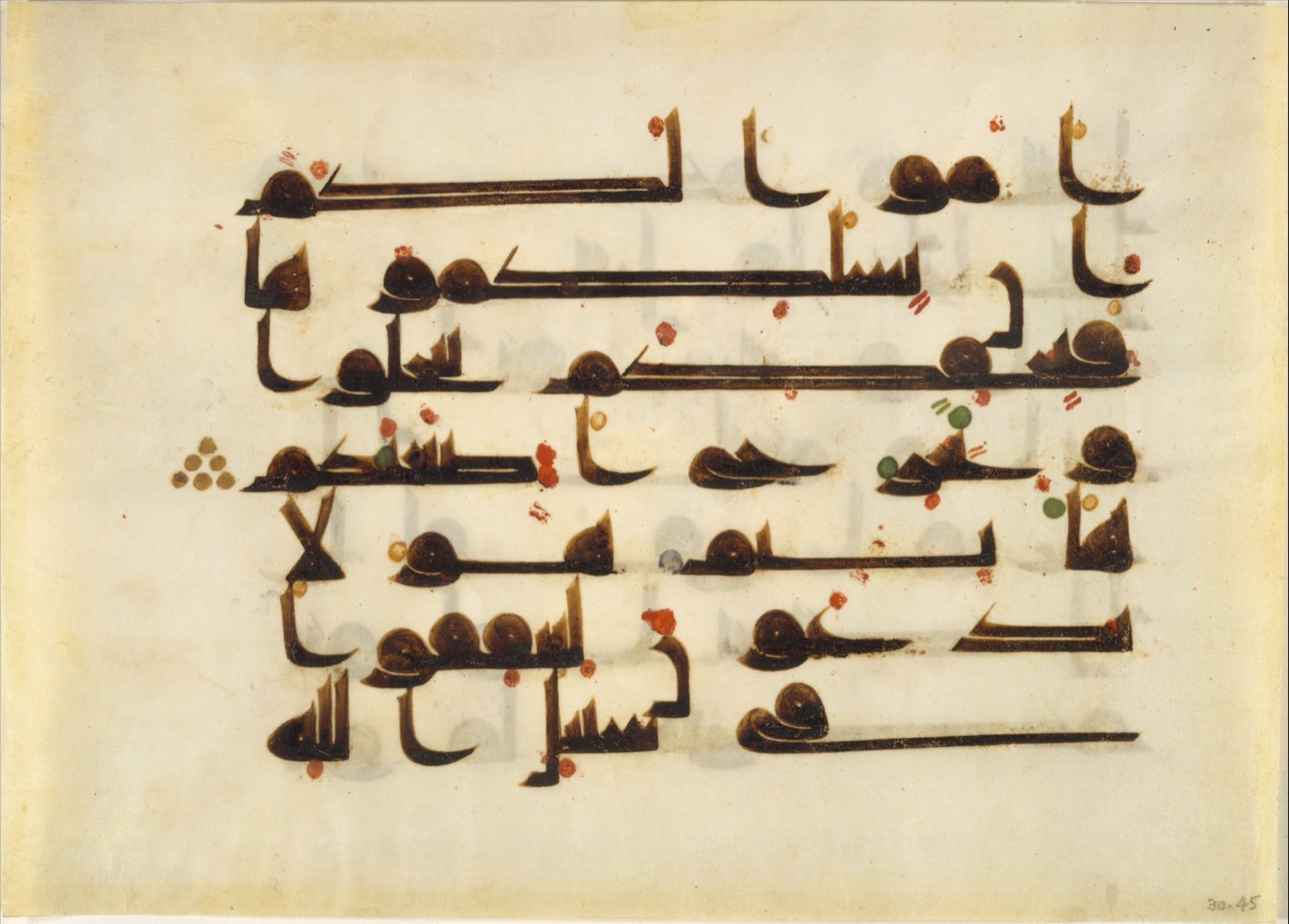
Twenty-eight letters, written right to left, joined up, with most letters taking different shapes depending on position. It looks harder than it is — a couple of weeks of practice gets you reading letter by letter.
The real cost is that short vowels are not written. Outside textbooks and the Quran, you get consonants and long vowels only. Reading therefore depends on already knowing the word — you are recognising, not decoding.
That inverts the usual order: in Spanish you can pronounce a word you have never seen. In Arabic you generally cannot, and reading fluency arrives behind vocabulary rather than ahead of it.
Sounds English does not have
A handful of consonants produced further back than English goes — ʿayn, ḥāʾ, qāf, ghayn — plus the emphatic consonants, which change the quality of the vowels around them.
These need a person. Approximating them does not produce an accent; it produces a different word, and English speakers routinely cannot hear their own errors here.
Root and pattern — slow, then fast
Most Arabic vocabulary is built from three-consonant roots slotted into patterns that carry grammatical meaning.
Take k-t-b, which has to do with writing: kitāb is a book, kātib is a writer, maktab is an office, maktaba is a library, kataba is he wrote.
This is genuinely unfamiliar and slow to begin with. It is also the biggest accelerator in the language: once you have the patterns, a new root delivers an entire family of words at once. The vocabulary curve in Arabic is steeper at the start and flatter later than in almost anything else.
Two registers means two sets of hours
The uncomfortable arithmetic: MSA and a dialect overlap substantially but not completely. Learning both is not double the work, and it is not the same work either. The 2,200-hour figure reflects FSI's own programme, which teaches MSA plus a dialect — so it already assumes you are doing both.
What each level actually costs
| Goal | Method | Estimate |
|---|---|---|
| A2 — simple everyday exchanges | App, 20 min/day | around 1,100 hours |
| B1 — hold a conversation | Tutor, 1 hr/day, 5 days | around 1,155 hours, ~4.4 years |
| B1 — hold a conversation | Self-study, 1 hr/day, 5 days | around 1,620 hours |
| C1 — professional proficiency | Intensive class, FSI-style | 2,200 hours, ~1.4 years full-time |
Note the self-study row. Arabic punishes app-only and book-only study more than most languages, because the sounds need correction and the dialect you actually need is under-served by materials.
If you already speak Hebrew
A real discount, and our estimate applies it — conversational Arabic drops from about 4.4 years to roughly 3.1 at the same pace.
Both are Semitic languages built on the same root-and-pattern principle, so the single most alien structural feature of Arabic is already familiar. There is shared vocabulary, comparable grammar behaviour, and both scripts omit short vowels in ordinary writing, so the reading-by-recognition habit transfers too.
The scripts themselves are unrelated, and the sound systems differ — modern Hebrew has lost most of the back-of-throat consonants that Arabic keeps.
What actually works
- Decide MSA or dialect in week one, based on what you want to do. This decision costs nothing to make and a year to get wrong.
- Get the throat consonants corrected by a person early. You cannot hear your own errors, and they are not cosmetic.
- Learn roots, not words. Time spent understanding the pattern system pays back for the entire rest of the language.
- Expect reading to lag speaking, not lead it. Unwritten short vowels mean you have to know a word before you can read it, which is the opposite of how European languages work.
- Find dialect material deliberately. Textbooks default to MSA. If conversation is your goal, you will have to go out of your way for the input you actually need.
How you study matters more than which language
The same target, the same hour a day, five different ways of spending it.
Common questions
- Should I learn Modern Standard Arabic or a dialect?
- It depends entirely on what you want to do, and this is the first decision rather than a detail. Modern Standard Arabic is the language of news, books, formal writing and speeches — nobody grows up speaking it. Dialects are what people actually talk in, and they differ enough between regions that Moroccan and Iraqi speakers may switch to MSA to understand each other. Learning MSA to have conversations is the single most common way learners waste a year.
- How different are the dialects really?
- Far enough apart that mutual intelligibility breaks down across distant regions — a Moroccan and a Gulf speaker in casual speech are not having an easy time. Egyptian is the most widely understood, because Egyptian film and television have been exported across the Arab world for decades, which makes it the usual default for a learner without a specific country in mind.
- Is the alphabet hard?
- The letters are quick — 28 of them, joined up, most changing shape by position. A couple of weeks of practice. What takes longer is that short vowels are simply not written outside textbooks and the Quran, so reading requires knowing the word already. Reading Arabic is less decoding than recognition, and that is a slower skill to build.
- What is root-and-pattern morphology?
- Most Arabic words are built from a three-consonant root slotted into a pattern that carries the grammatical meaning. From k-t-b you get kitāb (book), kātib (writer), maktab (office), maktaba (library). It is unfamiliar and slow at first, then becomes the single biggest accelerator in the language — once the patterns are internalised, whole families of vocabulary arrive together.
- Which sounds are hardest for English speakers?
- A handful with no English equivalent, mostly produced further back in the throat than English uses: ʿayn, ḥāʾ, qāf, ghayn, and the emphatic consonants that change the vowels around them. They take dedicated work with a person who can hear what you are doing, and approximating them makes some words unrecognisable rather than merely accented.
If you already speak one of these
Our estimate applies a reduction for each, and each has its own write-up.
Where to study Arabic
Matched by the same rules the calculator uses, at a B1 target with no prior related language. The rules were written before any of these were added and the ranking code cannot read commission rates — a test rewrites every payout and checks the order does not move.
Anyone who needs to retain vocabulary — free, and better at spaced repetition than every paid app.
Not for: People who want a curriculum — Anki is a tool, not a course
Intermediate learners who want native input from video with dual subtitles, at no cost.
Not for: Beginners — unscripted native speech below A2 is noise, not input
- Rocket Languagesabout $260 once · Structured self-study course · up to B2
Learners who want one structured course covering grammar explicitly, bought once rather than rented.
Not for: Anyone who wants live correction from a human — this is a recorded course
- Pimsleurabout $150 once · Structured self-study course · up to B1
Learners who want to speak from the first lesson and can give it thirty focused minutes of audio a day, hands-free.
Not for: Anyone who wants to read or write the language — the method is almost entirely spoken
Your own target and budget change this list — run it for your case. Prices carry the date they were checked and go stale; confirm on the merchant's own site before paying.
Sources
Where the baseline figure on this page comes from. Everything applied on top of it is our own estimate.
- Foreign Language Training — US Department of State, Foreign Service Institute
The class-hour bands every estimate on this site starts from, and the definition of the proficiency they lead to (ILR Speaking-3 / Reading-3).
- FSI Language Difficulty Ranking — fsi-language-courses.org
Which languages sit in which band. The State Department publishes the categories as an image, so per-language assignment comes from independent reproductions that agree with each other and with the official hour bands.
By Kevin Fan. Native Mandarin speaker who learned English as a second language — the same pairing this site prices at 2,200 hours, done from the far side. Builds and maintains the estimate model and every page on it. Last reviewed 2026-08-08. How we work these numbers out, including which coefficients are our own estimates.