How long does it take to learn Latin?
There is no authoritative figure, because the question hides a second one: learn Latin to do what? The Foreign Service Institute — the source of the hour counts for every other language on this site — does not teach Latin and publishes no number for it. What exists instead is a reading ladder, and the rungs are far apart: simplified textbook Latin comes quickly, Caesar and Cicero take a few years of consistent work, and Tacitus and Latin verse defeat people who have read Latin comfortably for a decade. Anyone quoting you a single number has picked one rung and not told you which.
Every other language page on this site opens with a number from the same source. This one cannot, and the reason is more interesting than the missing figure.
There is no authoritative hour count for Latin. The Foreign Service Institute, which publishes the class-hour figures behind every other estimate here, trains people for overseas postings — and there is no posting where Latin is spoken. Its published difficulty categories cover roughly seventy languages and do not name it.
But the deeper reason is that "learn Latin" does not describe one destination.
The question hides a second question
For a modern language, "how long to conversational fluency" is a well-formed question because everyone means roughly the same thing by it. For Latin it is not, because the goal varies enormously and so does the answer:
- Read simplified Latin — the Lingua Latina or Cambridge Latin Course kind of text, written to be read by learners. Months, not years.
- Read Caesar, or the easier Cicero — real classical prose, chosen for teaching because it is the most regular. The usual target of a two-to-three year school sequence.
- Read Tacitus, Latin verse, or Silver Age prose — compressed, allusive, deliberately difficult. People who have read Latin comfortably for a decade still work through this with a commentary.
That is not a range within one skill. It is three different achievements, and a page quoting you a single number has silently picked one.
Latin is a reading language, and that changes the arithmetic
This is the structural difference from every other language on this site.
The standard goal is reading. The National Latin Exam — the largest Latin assessment there is, taken across eight levels — tests reading and written comprehension. The American Classical League's Standards for Classical Language Learning describe what a learner can do with texts.
Neither publishes a number of hours. That is the same deliberate omission CEFR and ACTFL make, and it is defensible: they are describing attainment, not selling a timeline.
What matters for your planning is what reading-only removes:
No listening comprehension. The single largest time sink in a modern language — understanding someone at natural speed, with an accent, without a transcript — does not exist here.
No speaking under pressure. No producing correct case endings in real time while someone waits.
But also no immersion, and no tutor conversation. The two fastest methods for modern languages are unavailable. There is no country to move to. You cannot practise Latin by living in it.
The net effect is that Latin is slower per unit of grammar than its difficulty suggests, and faster to a useful level than a spoken language of similar complexity — because the useful level is reading, and reading is the one skill you can build alone.
Where the time actually goes
The grammar is front-loaded and finite
Five declensions, six cases, four conjugations, and a participle system with no English equivalent. This is the same order of machinery as Russian or German, and unlike them it is genuinely finite: the forms stop. There is a defined set, you learn it, and no native speaker will invent a colloquial form you have not met.
Most courses get through the whole grammar in one to two years. That part is a known quantity.
#
The sentences are where people stall
This is the honest answer to "why is Latin hard", and it is not the grammar.
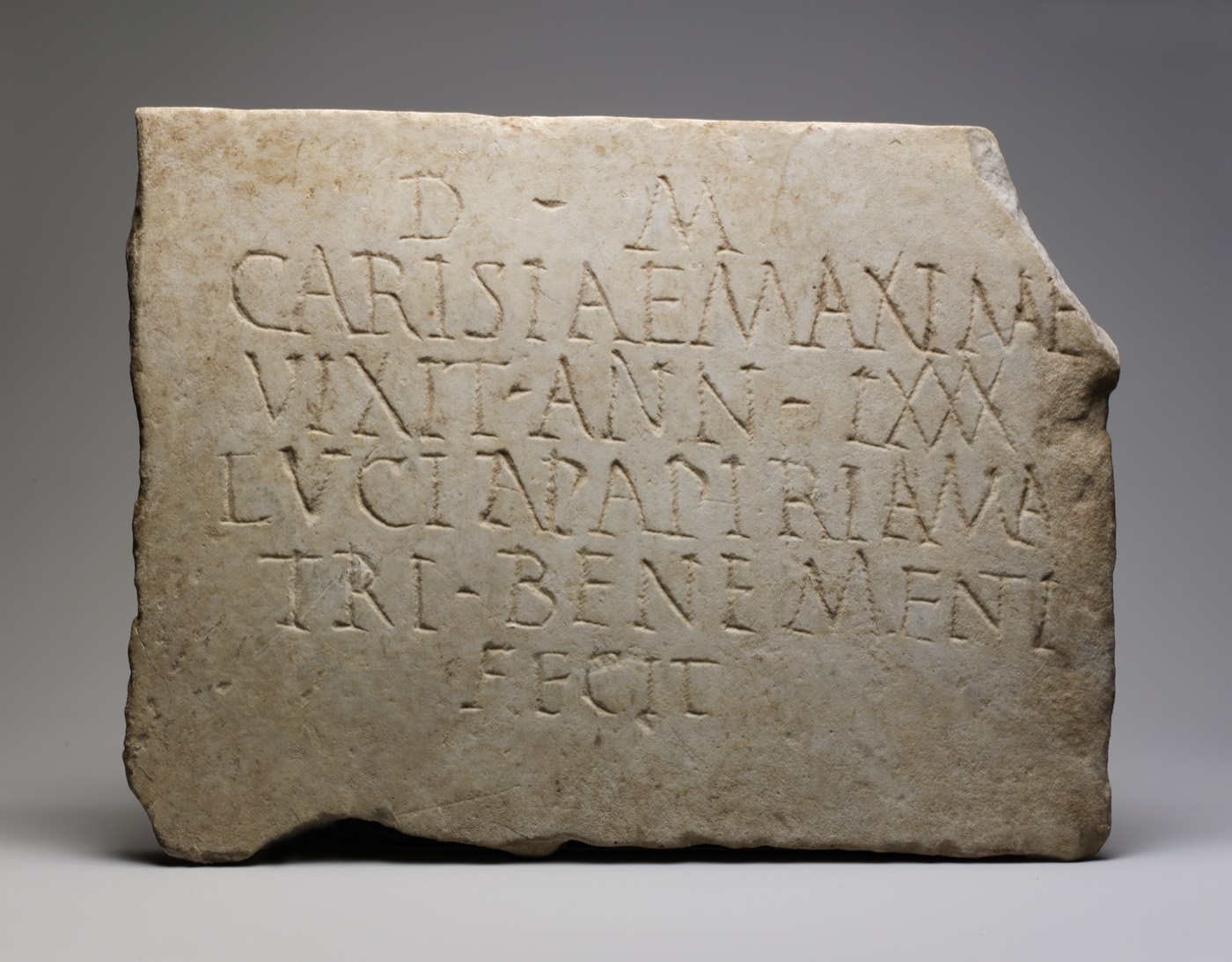
Classical prose was written for an audience trained in rhetoric. A single Ciceronian sentence can run half a page, with the main verb at the end and three or four subordinate clauses nested inside it. Word order is not structural — it carries emphasis — so you cannot read left to right and accumulate meaning. You have to hold the whole sentence before any of it resolves.
Nothing in modern-language study builds this, and no app drills it. It is built by reading real text with something honest to check against.
Vocabulary is smaller than you fear
The classical canon is a closed corpus. A few thousand words covers most of the prose you will read, and there is no slang, no new coinage, and no register of everyday speech to acquire separately. English derivatives help far more than they do with Greek, because English borrowed from Latin into every register rather than only the academic one.
Classical or ecclesiastical — decide first
Not a different language, but a different pronunciation and a different reading list.
Classical uses a reconstructed pronunciation and centres on roughly Cicero to Tacitus. Ecclesiastical uses Italianate pronunciation and draws on liturgical and medieval writing, which is generally the easier read.
The grammar is largely shared, so this is not a fork in the road so much as a fork in your audio. Get it wrong and every recording you own mismatches every text you read.
What this means for the calculator
The calculator on this site covers thirty languages and deliberately does not cover Latin — the model rests on FSI hours, and there are none. Inventing a baseline to make the tool look complete would be exactly what the pages quoting you a number are doing.
What to do instead:
- Name your rung before you start. "Read Caesar with a dictionary" is a plan. "Learn Latin" is not, and it is why the estimates you find online disagree by an order of magnitude.
- Read real text early, badly. The stall is at sentence structure, and it is only built on real sentences. Waiting until the grammar is finished postpones the actual skill.
- Get a commentary, not a translation. A commentary tells you why the sentence works. A translation tells you the answer and teaches nothing, and the difference compounds over years.
- If a Romance language is the real goal, go straight there. Latin helps with Spanish or French vocabulary and grammatical intuition, but it is a long way round, and it gives you no listening practice at all.
Why this page exists
Because "how long does it take to learn Latin" is asked often and answered with a confident number, and the number is always someone's own course length repackaged as a fact.
If a body with the standing to measure it publishes hours per attainment level, this page will get a figure with the source beside it. Until then it has an honest account of why there isn't one.
Common questions
- Why is there no official hour figure for Latin?
- Because the institution that produces those figures has no reason to teach it. The Foreign Service Institute trains diplomats for overseas postings, and its published difficulty categories name around seventy modern languages without naming Latin. The bodies that do assess Latin — the American Classical League and the National Latin Exam among them — measure reading comprehension across their exam levels and state no study hours for any of them, which is the same choice CEFR and ACTFL make for living languages.
- Do I need to speak Latin?
- Almost certainly not, and this is what makes Latin different from every other language on this site. The standard goal is reading, and the largest Latin exam in the world tests reading and written comprehension rather than speech. That removes the two things that make modern languages slow — producing correct sentences under time pressure, and understanding someone else at speaking speed — and it is why the FSI framing of professional speaking proficiency does not transfer. A spoken-Latin movement exists and is growing, but it is a choice, not the default.
- How hard is Latin grammar compared to German or Russian?
- Comparable machinery, applied more consistently. Five noun declensions, six cases, four verb conjugations, and a participle system English has no real equivalent for. What makes it feel harder than Russian to beginners is not the grammar but the prose: classical authors wrote sentences of a length and subordination that no modern language teaching materials prepare you for, and word order carries emphasis rather than structure, so a sentence has to be held whole in your head before it resolves.
- Does Latin make Spanish or French easier afterwards?
- Yes for vocabulary and grammatical intuition, less than people expect for actually using them. You arrive with a large recognisable vocabulary and no confusion about what a case or a subjunctive is. What you do not arrive with is listening or speaking practice in any of them, which is where most of the time in a modern Romance language goes. Treat it as a real head start on reading and a small one on conversation.
- Is ecclesiastical Latin a different language?
- Not a different language, but a different pronunciation and a different body of texts. Ecclesiastical Latin is read with Italianate pronunciation and draws on liturgical and medieval writing; classical Latin uses a reconstructed pronunciation and centres on authors from roughly Cicero to Tacitus. The grammar is largely shared and medieval Latin is generally the easier read. Decide which you want before buying materials, because the audio will not match if you get it wrong.
- Can I get to reading Latin with an app?
- Apps can carry the vocabulary and the early forms, and that part is real. They cannot carry the thing Latin actually consists of, which is unpicking a long periodic sentence where the main verb arrives last and three subordinate clauses are nested inside it. That skill is built by reading real text with something to check yourself against — a commentary, a teacher, or a facing translation used honestly. No app on the market drills it.
Sources
FSI publishes no figure for this language. These are the frameworks that do exist, and the evidence that no hour standard does.
- What is the National Latin Exam? — National Latin Exam / American Classical League
That Latin attainment is measured by reading and written comprehension across eight exam levels, and that the body running the largest such exam states no number of study hours for any of them.
- Standards for Classical Language Learning (2017) — American Classical League / Society for Classical Studies
The proficiency framework Latin is taught and assessed against in the US. Like ACTFL and CEFR, it describes what a learner can do and sets no hour figure.
By Kevin Fan. Native Mandarin speaker who learned English as a second language — the same pairing this site prices at 2,200 hours, done from the far side. Builds and maintains the estimate model and every page on it. Last reviewed 2026-08-08. How we work these numbers out, including which coefficients are our own estimates.