How long does it take to learn Greek?
The current NFATC page lists Greek at 1,012 class hours to integrated ILR 3 in speaking and listening — the same category as Russian and Polish, about one and a half times Spanish. At an hour a day with a tutor, our model puts conversational Greek (roughly B1) at a little over two years. The alphabet costs a few days. The case system, the accent placement, and a vocabulary that shares its academic register with English but not its everyday one are where the rest goes.
- NFATC baseline
- 1012 class hours
- Difficulty band
- hard
- NFATC category
- Category III · Category IV legacy
Greek sits in current NFATC Category III: 1,012 class hours to an integrated ILR 3 in speaking and listening — the same category as Russian, Polish and Hebrew, and about one and a half times Spanish's derived 690.
The two standing warnings:
Those are classroom hours, not app minutes. The current NFATC page describes a typical week as 23 class hours plus 17 hours of self-study.
This is a high oral target, not conversational. The official endpoint is an integrated ILR 3 in speaking and listening. Treating it as roughly C1 is our planning assumption, not an official CEFR crosswalk.
The alphabet is not the problem
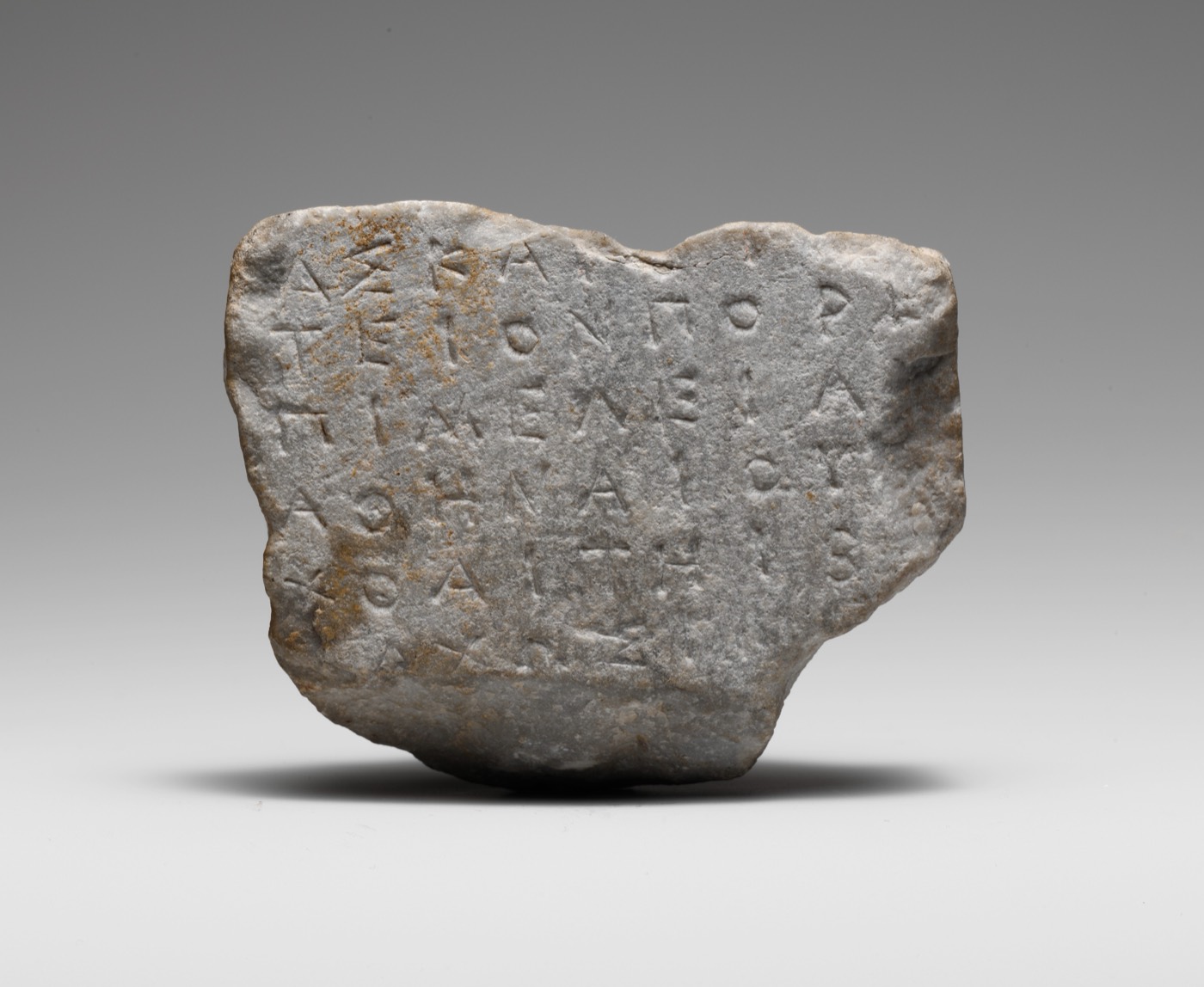
Greek looks foreign from outside, and the alphabet is what stops people starting. It should not.
Twenty-four letters, roughly half of which you already read: α, β, δ, ε, π, σ, τ, φ, λ, μ, ω turn up in every maths and physics course. The genuinely new shapes are few, and the reading direction is regular enough that seeing a word tells you how to pronounce it.
A few days to read slowly. A fortnight to stop noticing. Against 1,012 hours, it is a rounding error — the same story as Cyrillic and hangul.
The vocabulary trap
This is where Greek is different from every other language on this site, and it catches people out in a specific way.
English borrowed enormously from Greek — but only into one register. Democracy, psychology, telephone, chronology, philosophy, physics, biology, catastrophe, phenomenon. Hundreds of words, all of them abstract, formal or technical.
The everyday layer shares nothing. Bread, road, tired, tomorrow, cheap, to wait — none of these resemble anything in English.
The effect is a strange asymmetry: you can half-follow an academic lecture before you can order lunch. Learners consistently overestimate their footing because the words they recognise are the ones that make them feel advanced, and underestimate the vocabulary work that everyday competence still requires.
Where the time actually goes
Four cases, applied to everything
Nominative, accusative, genitive and vocative. Fewer than Russian's six or German's four-with-three-genders, but they apply across nouns, adjectives and articles together, so producing a noun phrase means resolving gender, number and case before the words come out.
Recognising cases while reading arrives quickly. Producing them at conversational speed is the slow part — the same shape of difficulty as German, and the same fix: drill production, not recognition.
Written accents that carry meaning
Every polysyllabic Greek word carries an accent mark, and it is not decoration. πότε is when; ποτέ is never. Same letters, different word.
This is easier than Russian, where stress is unwritten and has to be learned per word. Greek tells you. The trade is that getting it wrong is unambiguously wrong rather than merely accented, so accent has to be learned as part of the word from the first encounter.
Modern is not Ancient
Worth saying plainly because the confusion is common and expensive: Ancient Greek and Modern Greek are not the same language, and studying one does not deliver the other.
They share the alphabet and much vocabulary. But the dative case is gone, the infinitive is gone, and pronunciation has shifted so far that a reconstructed ancient pronunciation is unintelligible in Athens. Someone who read Plato at university starts modern Greek with a real head start on vocabulary and almost none on grammar or speech.
Decide which one you want before buying materials.
What each level actually costs
| Goal | Method | Estimate |
|---|---|---|
| A2 — simple everyday exchanges | App, 20 min/day | around 505 hours, ~4.2 years |
| B1 — hold a conversation | Tutor, 1 hr/day, 5 days | around 531 hours, ~2 years |
| B2 — work, study, argue a point | Tutor, 1 hr/day, 5 days | around 776 hours, ~3 years |
| C1 — advanced independent use | Intensive class, FSI-style | 1,012 hours, ~9 months full-time |
If you already speak another Indo-European language
Greek is its own branch — it has no close relatives, so there is no Portuguese-to-Spanish shortcut available anywhere.
What a Russian, Polish or German speaker brings is not necessarily vocabulary but familiarity with the machinery: cases, agreement, and more information carried in endings. That overlap is real; the modest hour reduction this model applies is an estimate rather than a measured pair effect.
What actually works
- Learn the alphabet in the first week and move on. It is the visible obstacle and the smallest one.
- Do not trust the words you recognise. The Greek you already know is the formal register; the vocabulary you need for a conversation is entirely separate work.
- Learn every word with its accent. It is written, so there is no excuse for guessing, and it distinguishes real pairs.
- Decide modern or ancient before you buy anything. They are different languages with a shared alphabet, and materials for one are close to useless for the other.
How you study matters more than which language
The same target, the same hour a day, five different ways of spending it.
Common questions
- Do I need to learn a new alphabet?
- Yes, and it is quick. Twenty-four letters, about half of which you already recognise from mathematics and science. A few days gets you reading slowly, a couple of weeks and it is automatic. Greek spelling is also largely regular in the reading direction, so seeing a word tells you how to say it — the reverse is less reliable, since several letter combinations produce the same vowel sound.
- Does knowing Greek roots from English help?
- Less than you would hope. English borrowed heavily from Greek for its scientific and academic register — democracy, telephone, psychology, chronology — and those words are recognisable. But the everyday layer, the words you need to buy bread or ask directions, is unrelated to anything in English. You start with a large formal vocabulary and almost no practical one.
- Is modern Greek the same as ancient Greek?
- No, and studying one will not give you the other. They share an alphabet and a great deal of vocabulary, but the grammar has changed substantially — the dative case is gone, the infinitive is gone, and pronunciation shifted enormously. A classicist reading Plato is not equipped to order coffee in Athens. Learn the one you actually want.
- How hard is the Greek case system?
- Four cases rather than the six of Russian or German, and no neuter-versus-common confusion to resolve — but they apply to nouns, adjectives and articles together, so every noun phrase needs gender, number and case settled before you can say it. The pattern is the same difficulty as German: fast to recognise while reading, slow to produce at speaking speed.
- Why does the accent mark matter so much?
- Because Greek stress is written and it distinguishes words. Every polysyllabic word carries an accent mark, and moving it changes meaning — the classic example is πότε (when) against ποτέ (never). Unlike Russian, where stress is unmarked and has to be memorised, Greek tells you where it goes; the cost is that getting it wrong is unambiguously wrong rather than merely accented.
Where to study Greek
Matched by the same rules the calculator uses, at a B1 target with no prior related language. The rules were written before any of these were added and the ranking code cannot read commission rates — a test rewrites every payout and checks the order does not move.
Anyone who needs to retain vocabulary — free, and better at spaced repetition than every paid app.
Not for: People who want a curriculum — Anki is a tool, not a course
Intermediate learners who want native input from video with dual subtitles, at no cost.
Not for: Beginners — unscripted native speech below A2 is noise, not input
- Rocket Languagesabout $260 once · Structured self-study course · up to B2
Learners who want one structured course covering grammar explicitly, bought once rather than rented.
Not for: Anyone who wants live correction from a human — this is a recorded course
- Pimsleurabout $150 once · Structured self-study course · up to B1
Learners who want to speak from the first lesson and can give it thirty focused minutes of audio a day, hands-free.
Not for: Anyone who wants to read or write the language — the method is almost entirely spoken
Your own target and budget change this list — run it for your case. Prices carry the date they were checked and go stale; confirm on the merchant's own site before paying.
Sources
Where the baseline figure on this page comes from. Everything applied on top of it is our own estimate.
- Foreign Language Training — US Department of State, National Foreign Affairs Training Center
The current NFATC training timelines: a typical week is 23 class hours plus 17 hours of self-study, aimed at an integrated ILR 3 in Speaking and Listening. Category I lists 24–30 weeks; using the page's typical class week, this site derives 552–690 class hours. Categories II–IV print 828, 1,012 and 2,200.
By Kevin Fan. Native Mandarin speaker who learned English as a second language — the same pairing this site prices at 2,200 hours, done from the far side. Builds and maintains the estimate model and every page on it. Last reviewed 2026-09-01. How we work these numbers out, including which coefficients are our own estimates.