Blog
Notes on what the data actually says, and on running this site. Written by Kevin Fan.
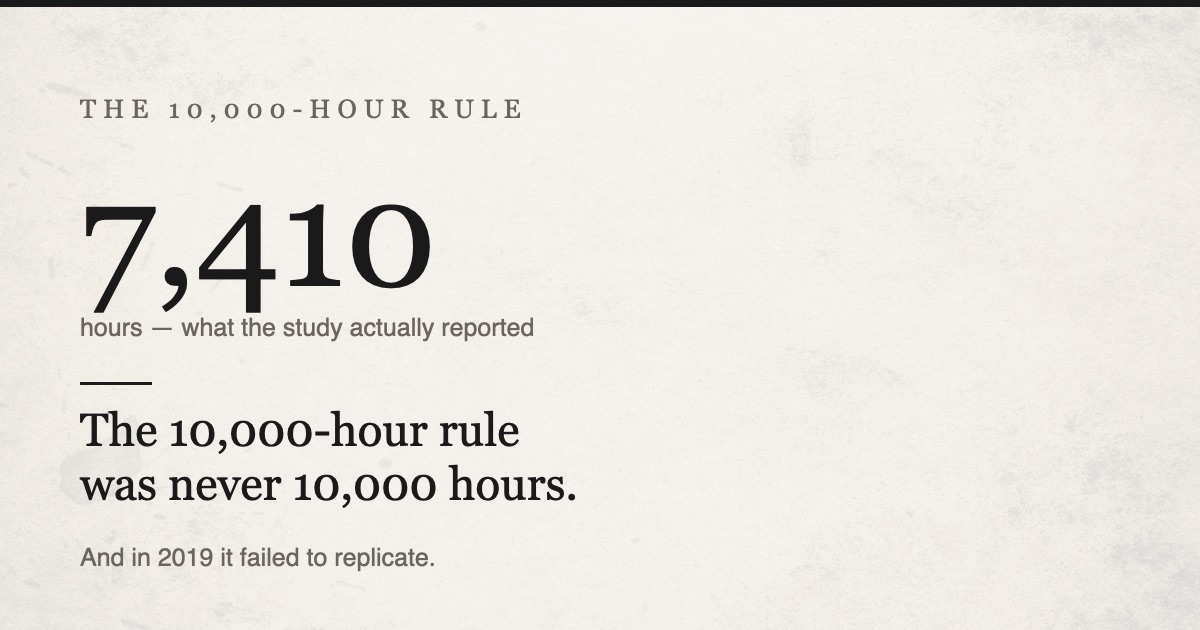
The 10,000-hour rule was never about 10,000 hours
The study everyone cites reported 7,410 hours, as an average with wide variation, about violinists. A 2019 replication found the second-best group had practised more than the best one. Here is what that means for a language.
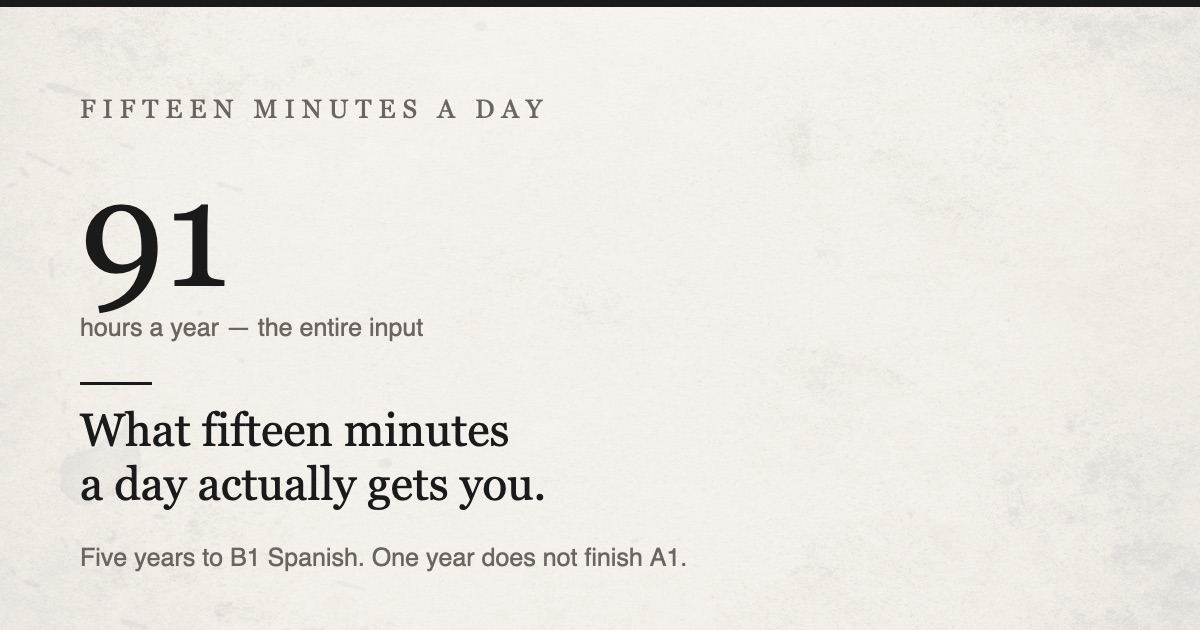
What fifteen minutes a day actually gets you
Five years of fifteen-minute daily sessions reaches B1 Spanish by structured self-study, A2 by app, and A1 Chinese. The first year does not complete A1 in any language. Here is the arithmetic.
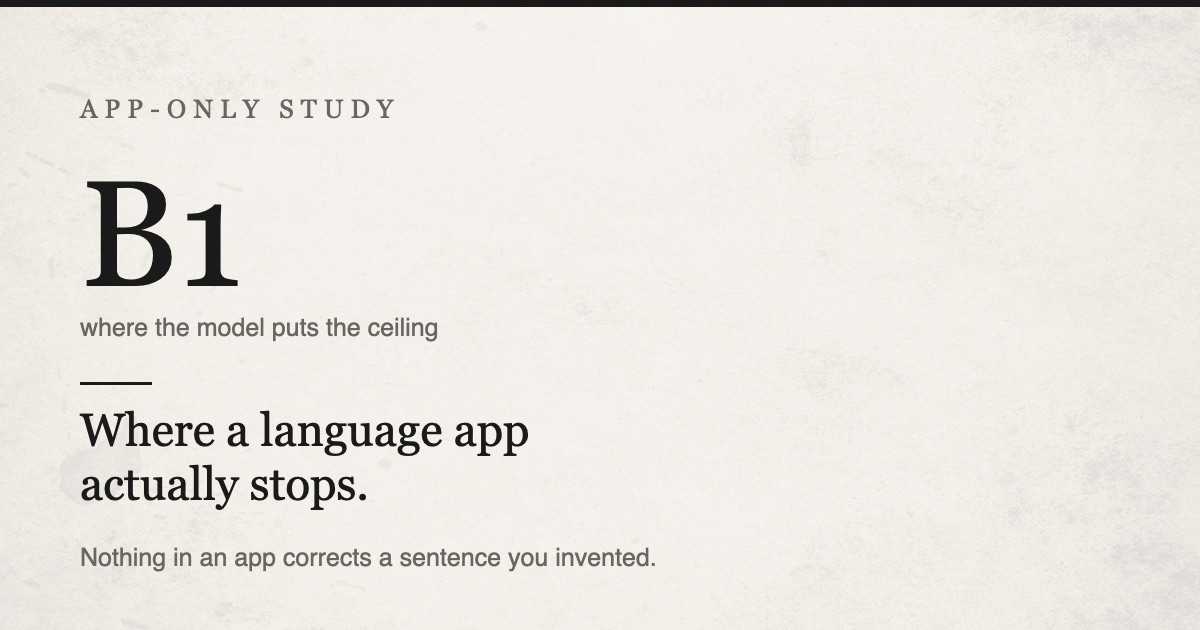
Where a language app actually stops
Not "apps are bad" — apps are excellent at the thing they do. The model puts their ceiling at B1, and the reason is structural: nothing in an app corrects a sentence you have never said before.
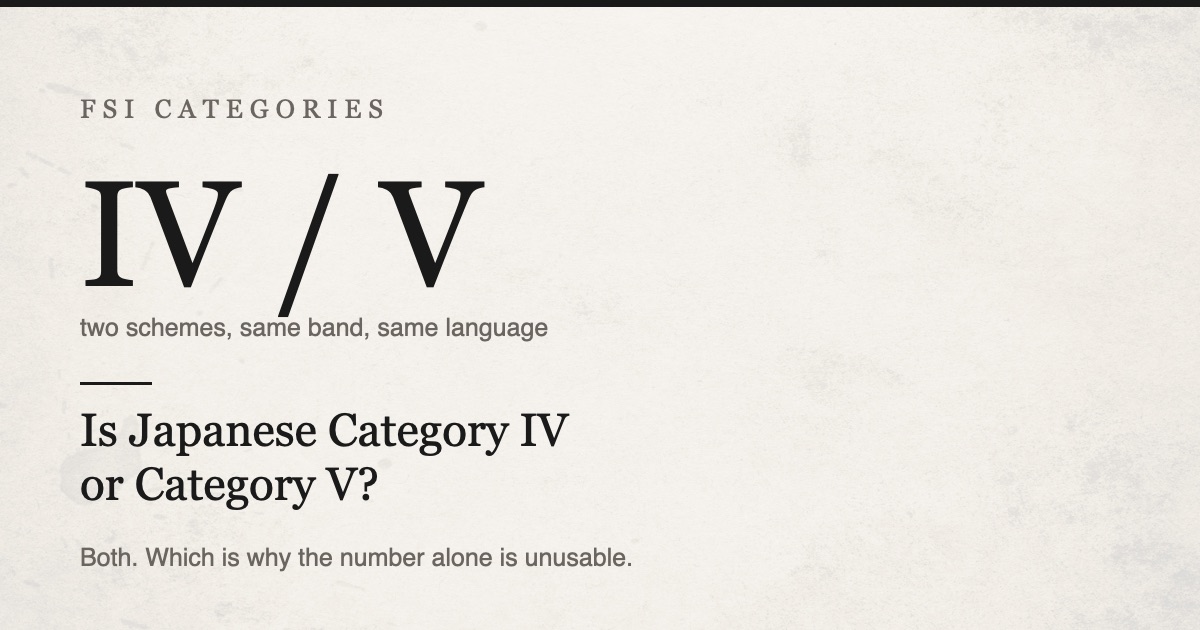
Is Japanese FSI Category IV or Category V? Both, and that is the problem
Two incompatible numbering schemes for the FSI difficulty categories are in circulation, and neither is wrong. Which one a page uses tells you whether it copied its data or checked it.
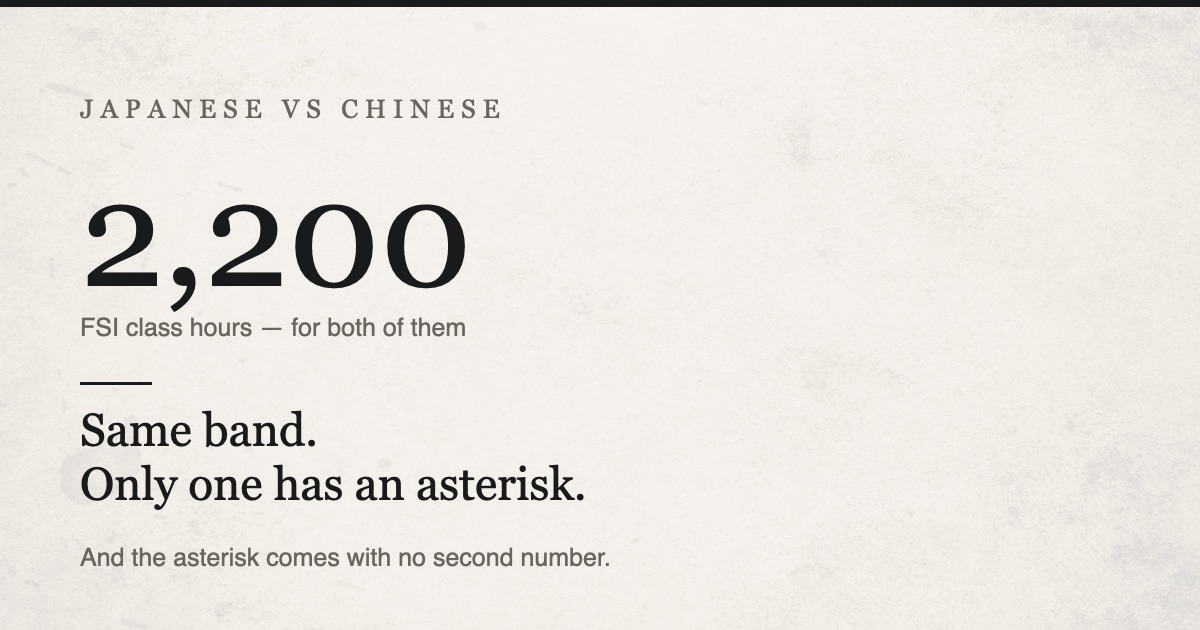
Japanese and Chinese sit in the same FSI band. Only one carries an asterisk
Both are 2,200 class hours. FSI marks Japanese, and only Japanese, as harder than the rest of its group — a footnote with no second number attached. Here is what it is doing in our model and why the figure it produces is an estimate.
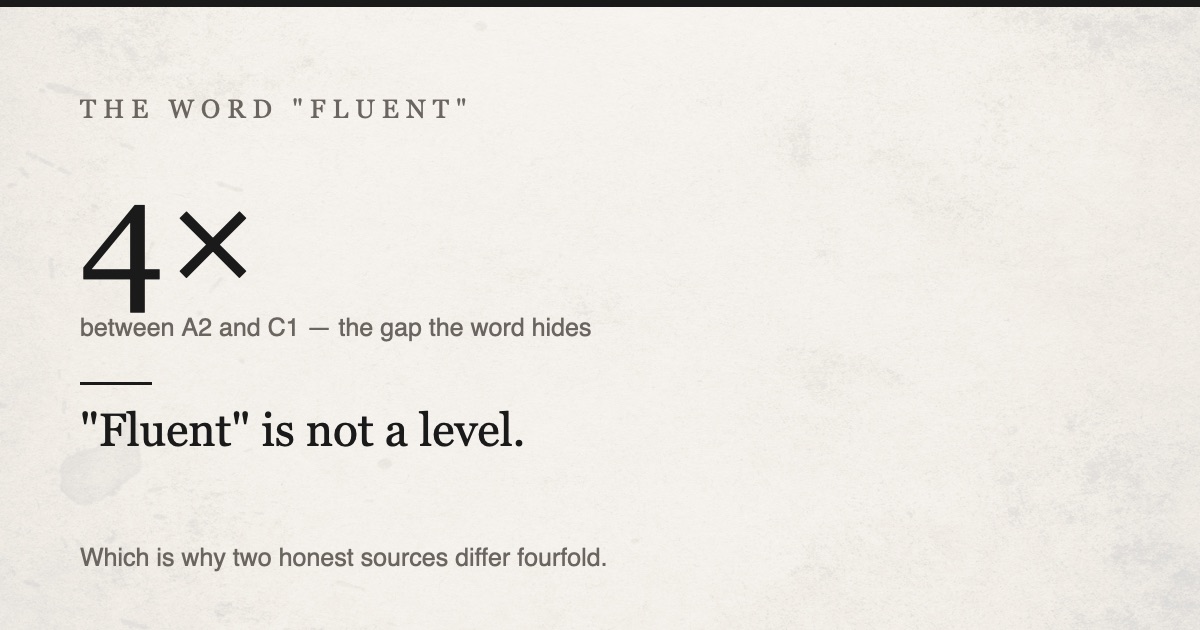
"Fluent" is not a level, and that is why the estimates disagree
FSI measures to ILR 3. CEFR describes what you can do. HSK claimed a mapping the CEFR bodies rejected. None of them define fluency, which is why two honest sources can differ by a factor of four.
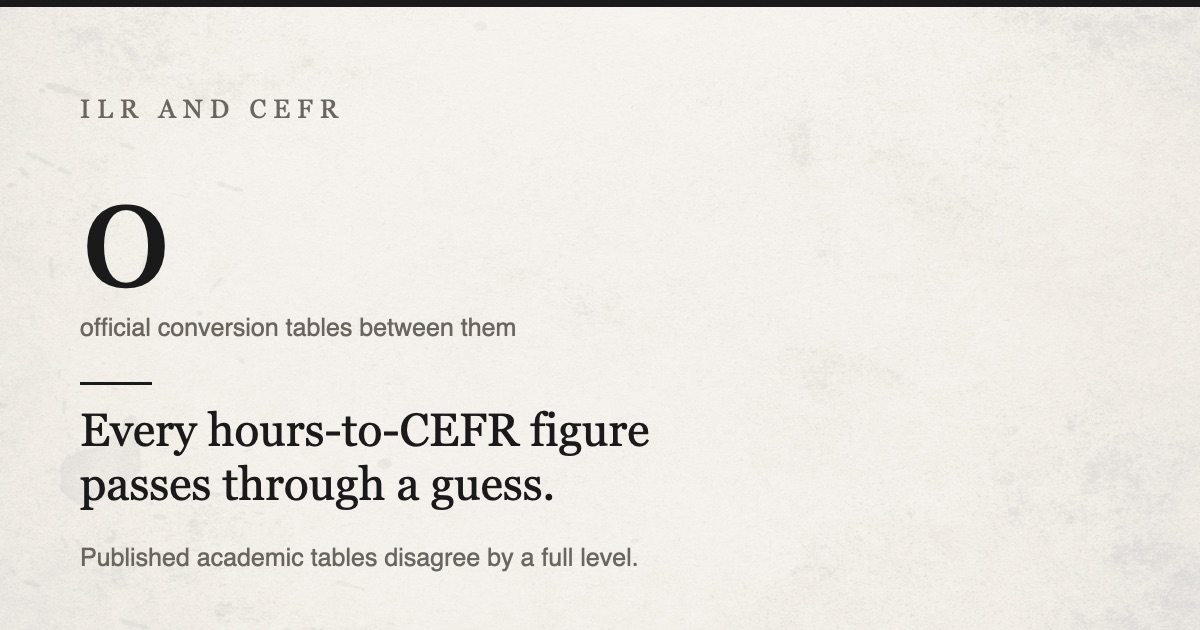
There is no official ILR-to-CEFR conversion table
Every hours-to-CEFR figure on the internet passes through a conversion that no standards body ever published. Published academic tables disagree by a full level. Here is which reading we take and why it makes our numbers larger.
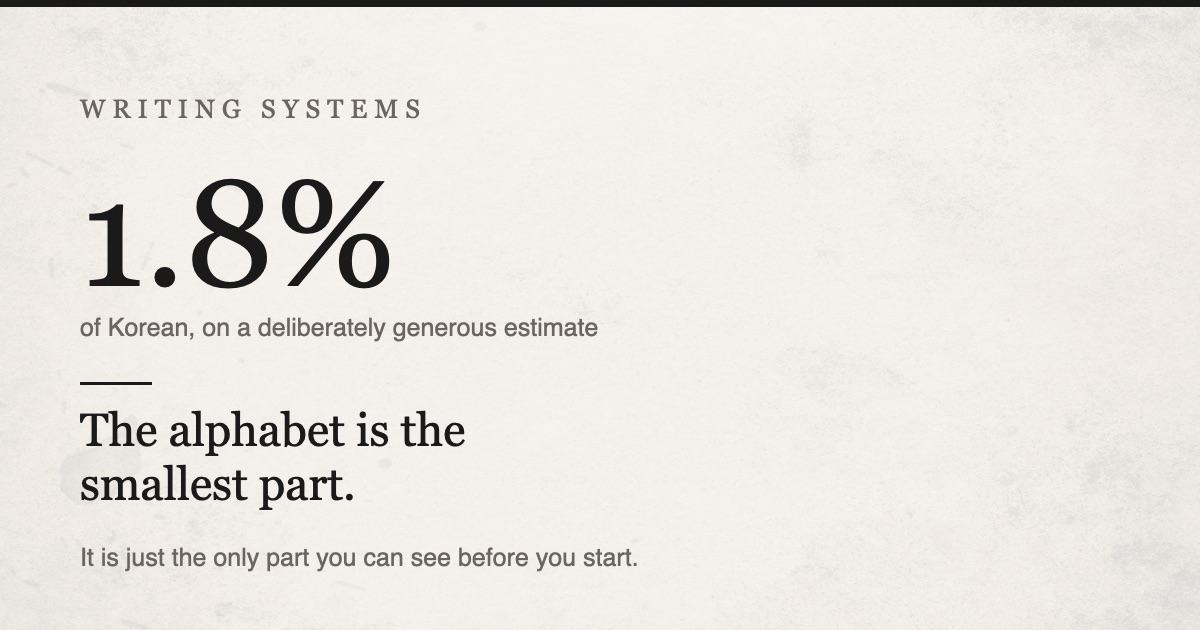
The writing system is the smallest part of a hard language
It is the first thing everyone asks about and the last thing that matters. Even a generous estimate for learning a script is a low single-digit percentage of what the language costs.
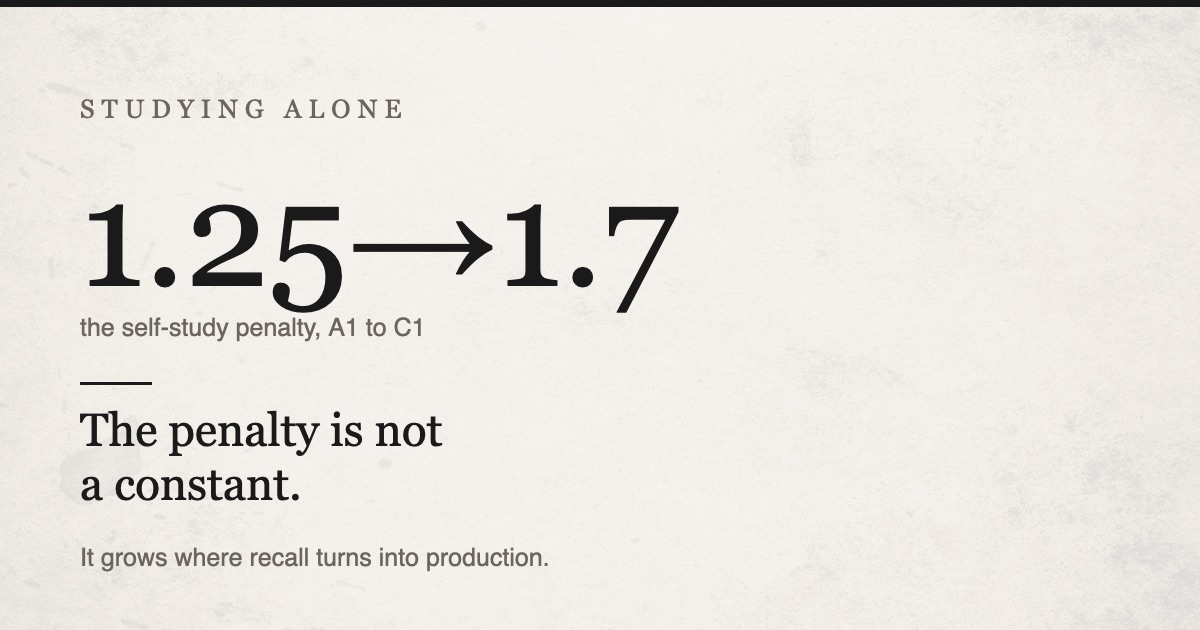
Why self-study costs 30% more at A2 and 70% more at C1
The penalty for studying alone is not a constant. It grows with the level, because what you are learning changes from recall to production — and production needs someone to be wrong in front of.
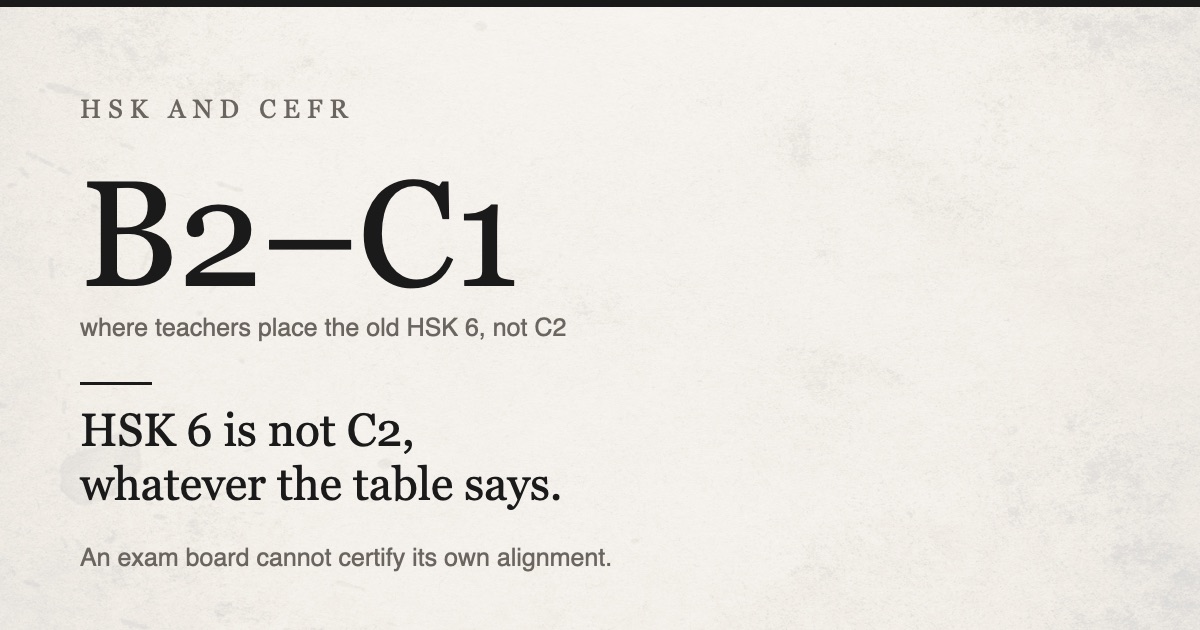
HSK 6 is not C2, whatever the mapping says
The exam body published a direct HSK-to-CEFR equivalence. The CEFR bodies did not accept it, and the German and French associations of Chinese teachers place the old HSK 6 nearer B2–C1. If you are planning around HSK levels, this is a two-level error.
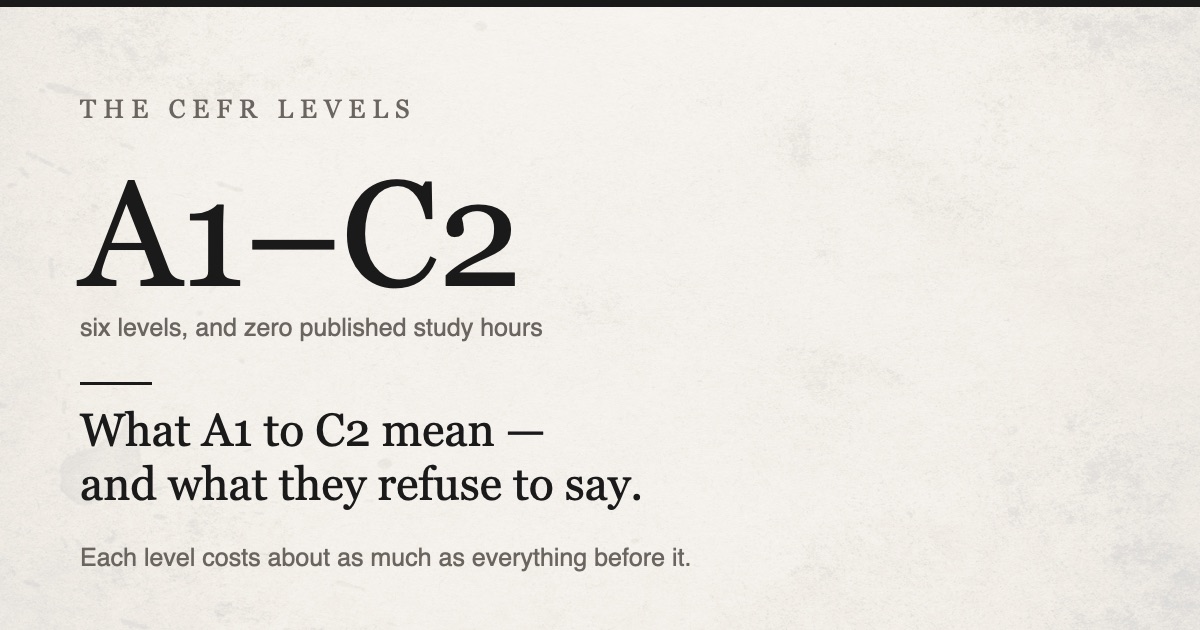
What A1 to C2 actually mean, and what they deliberately do not
CEFR describes what you can do at six levels and publishes no study hours, on purpose. The hour figures attached to it come from one exam board, about its own exams. Knowing which is which fixes most confusion in this field.
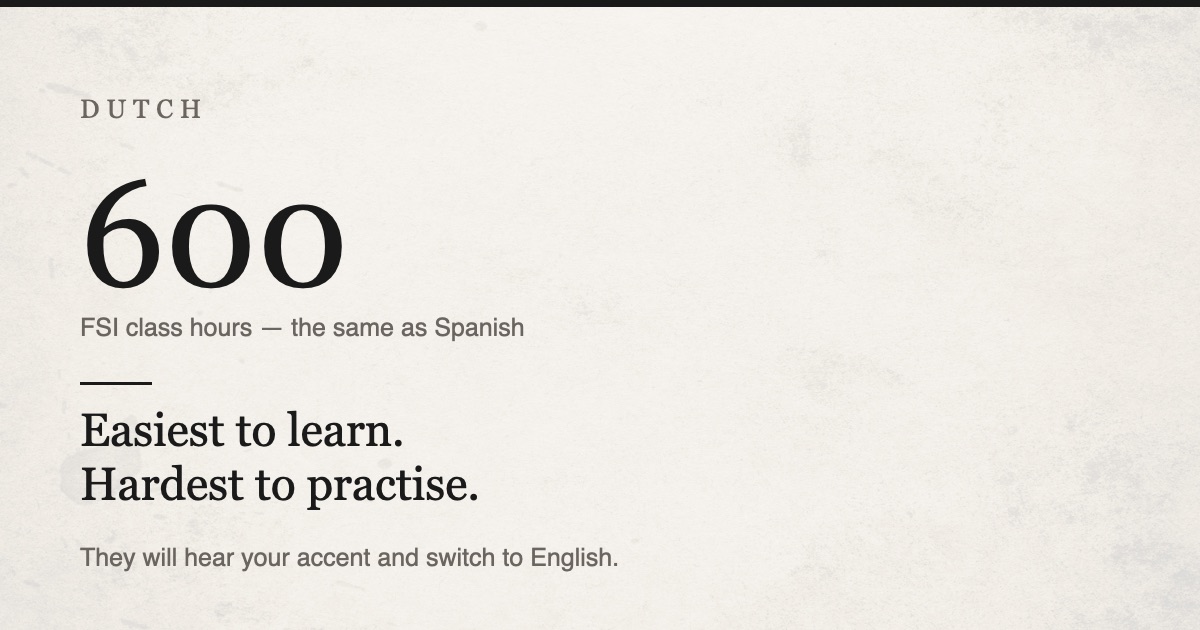
Dutch is the easiest language to learn and the hardest to practise
Same FSI band as Spanish, closer to English than anything else on the list, and almost every person you would practise with speaks better English than your Dutch. The obstacle is not the language.
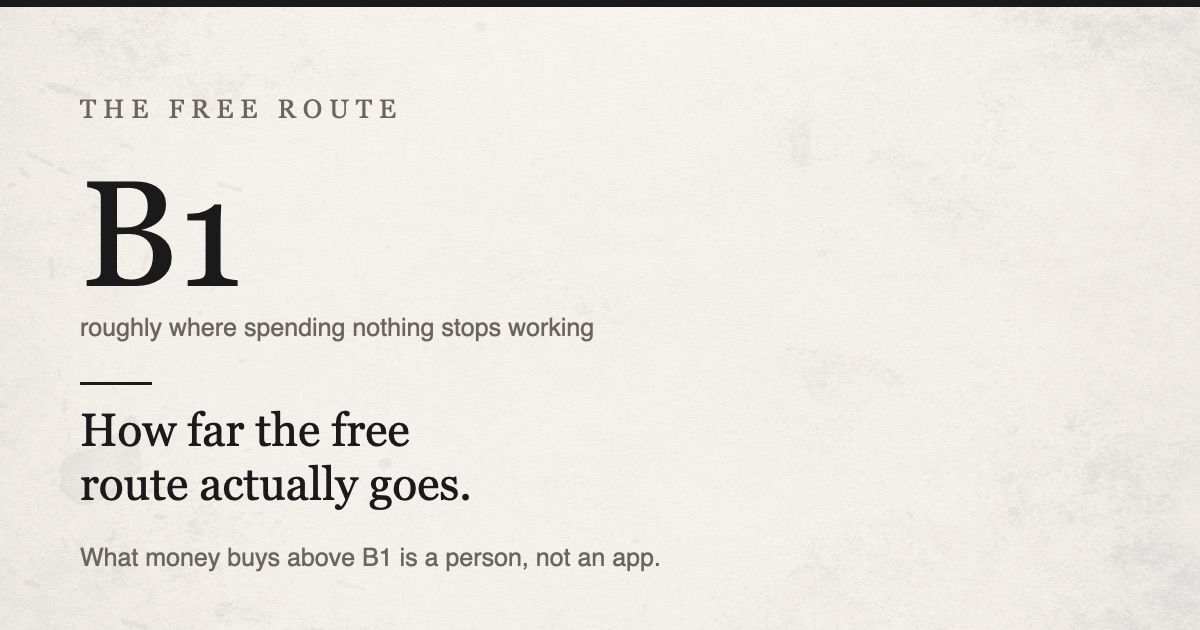
How far the free route actually goes
This site earns commission on some courses and nothing at all on others. The free tools are genuinely competitive up to about B1, and the honest recommendation for most beginners is to spend nothing yet.
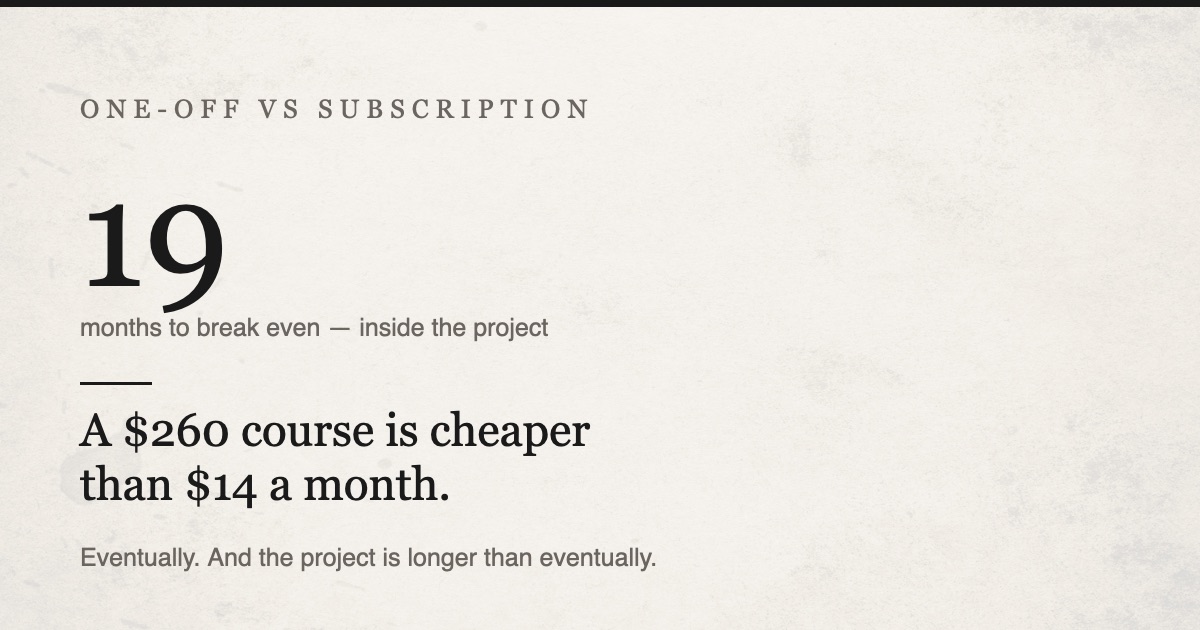
A $260 course is cheaper than a $14 subscription, eventually
Comparing a one-off purchase with a monthly fee needs a time horizon, and language learning horizons are longer than people plan for. Getting this wrong once made us recommend a $260 course to someone with no budget.
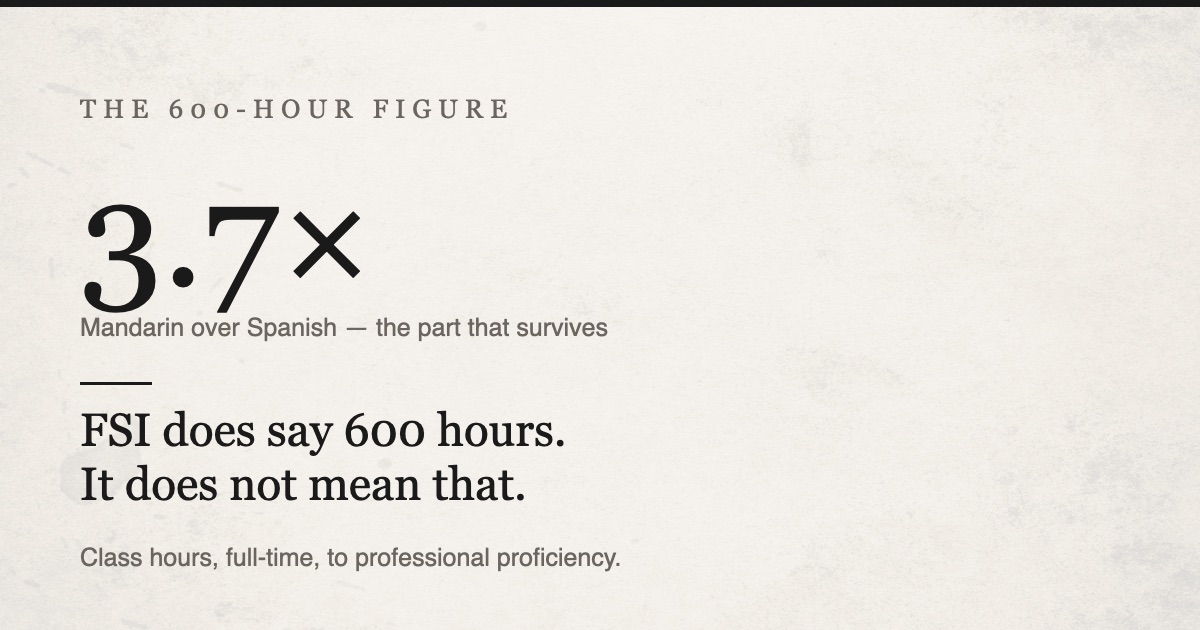
FSI does say 600 hours for Spanish. It does not mean what you think
The most reliable number in language learning is also the most misquoted. It is class hours, not total time; full-time small-group instruction, not an app; and it reaches professional proficiency, not conversation.
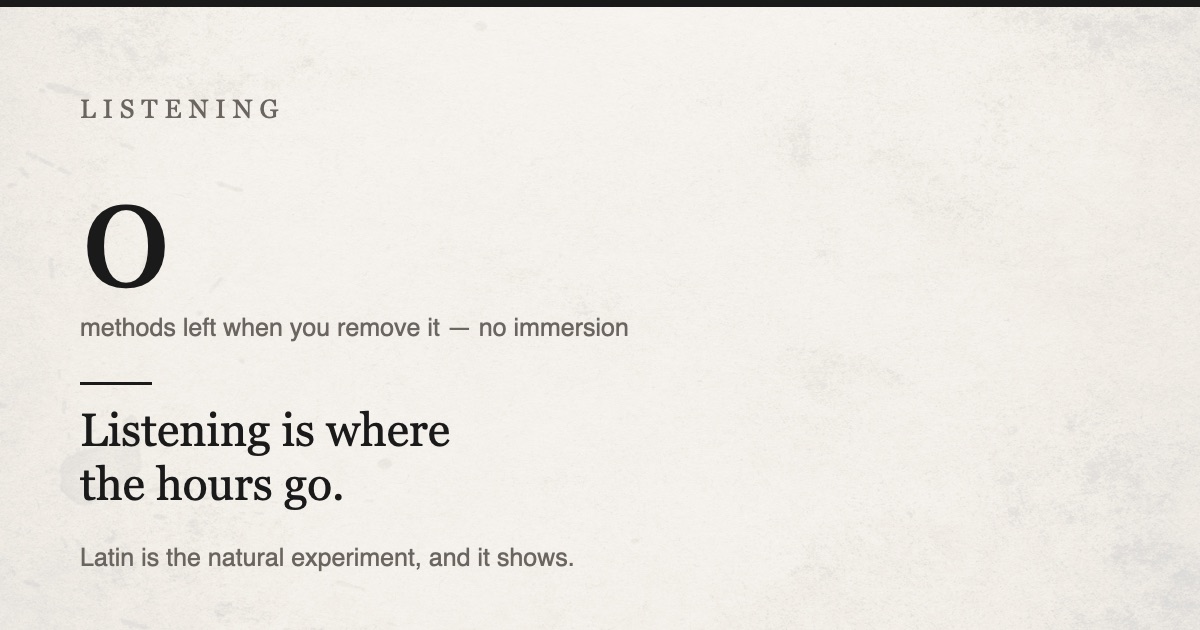
Listening is where the hours go, and Latin proves it
Remove listening and speaking from a language and the whole structure changes — no immersion, no tutor advantage, no ceiling on self-study. Latin is the natural experiment, and it is why reading-only goals are a different project.
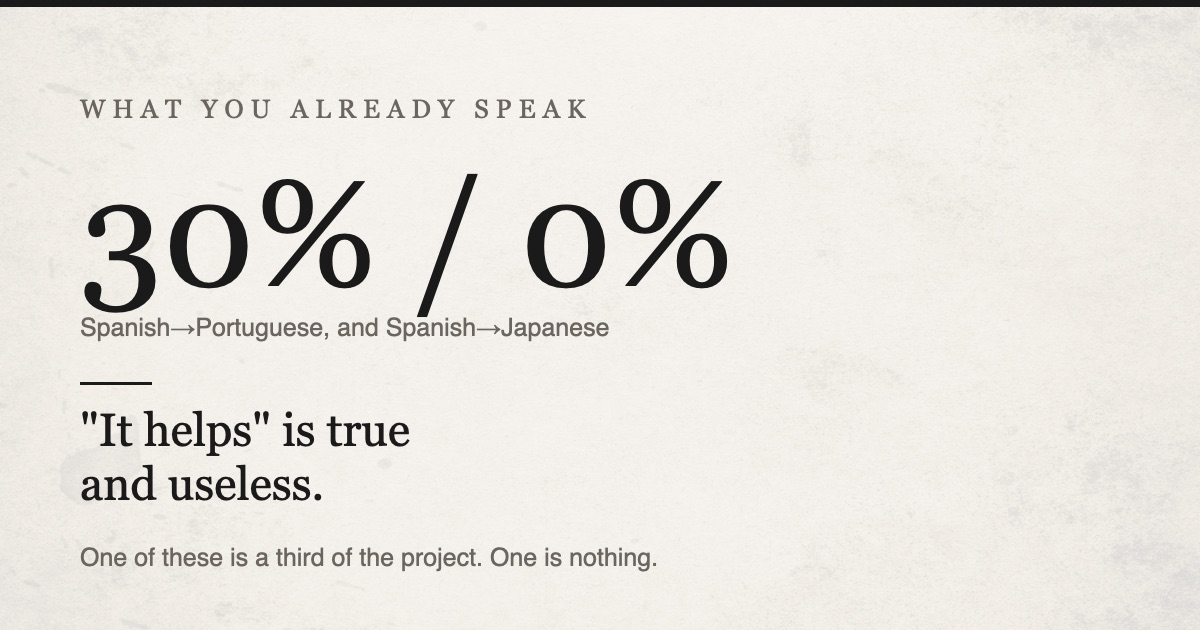
What a language you already speak is actually worth, in hours
Spanish takes about 30% off Portuguese. Russian takes about 8% off German, which is real and should change nothing. The difference between those two numbers is the whole point.
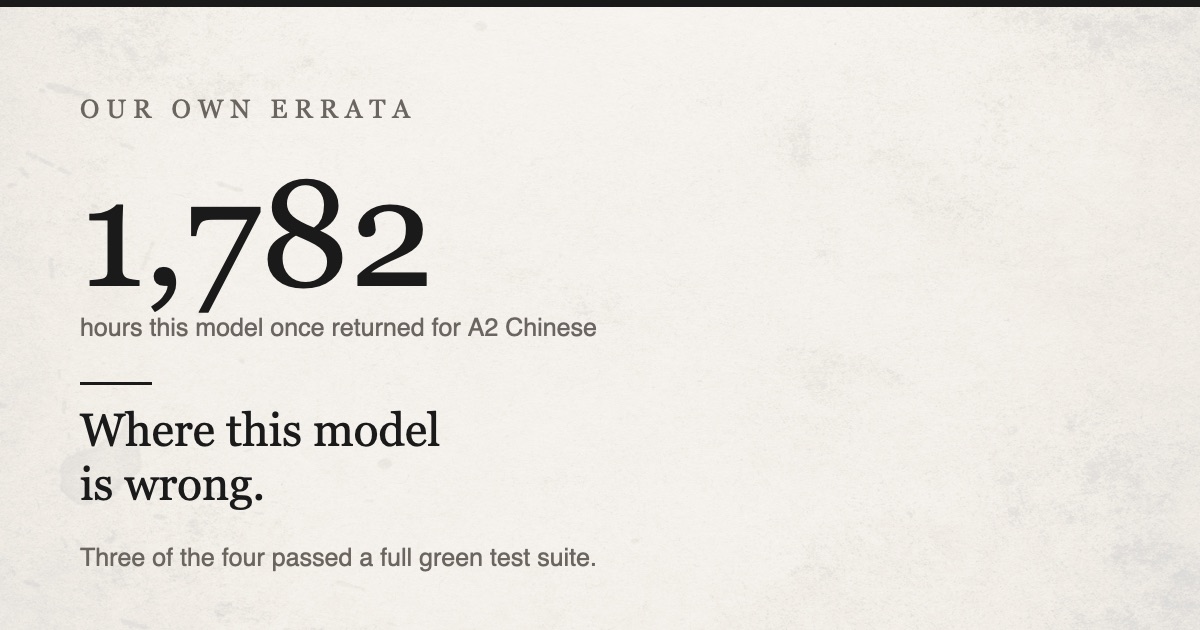
Where this model is wrong
Four errors this calculator has actually shipped, what each one produced, and what changed. Published because a site that traces other people’s sourcing failures should be able to show its own.
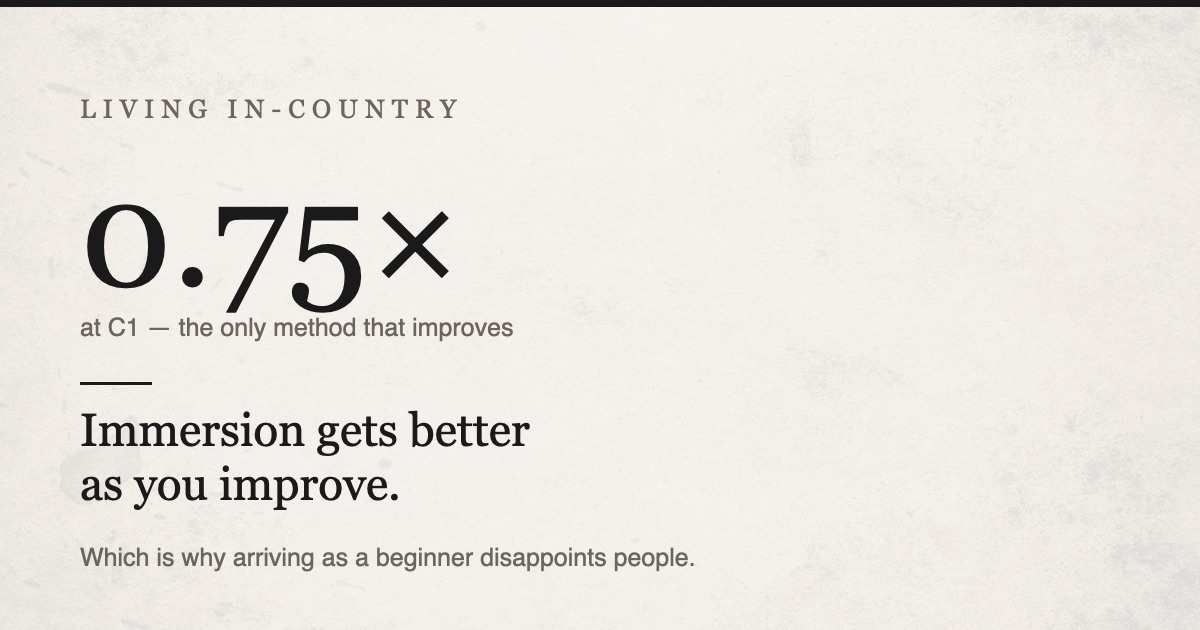
Immersion is the only method that gets better as you improve
Every other way of studying degrades at higher levels. Immersion runs 0.9× at A1 and 0.75× at C1 — and the reason it improves explains why moving abroad as a beginner disappoints people.
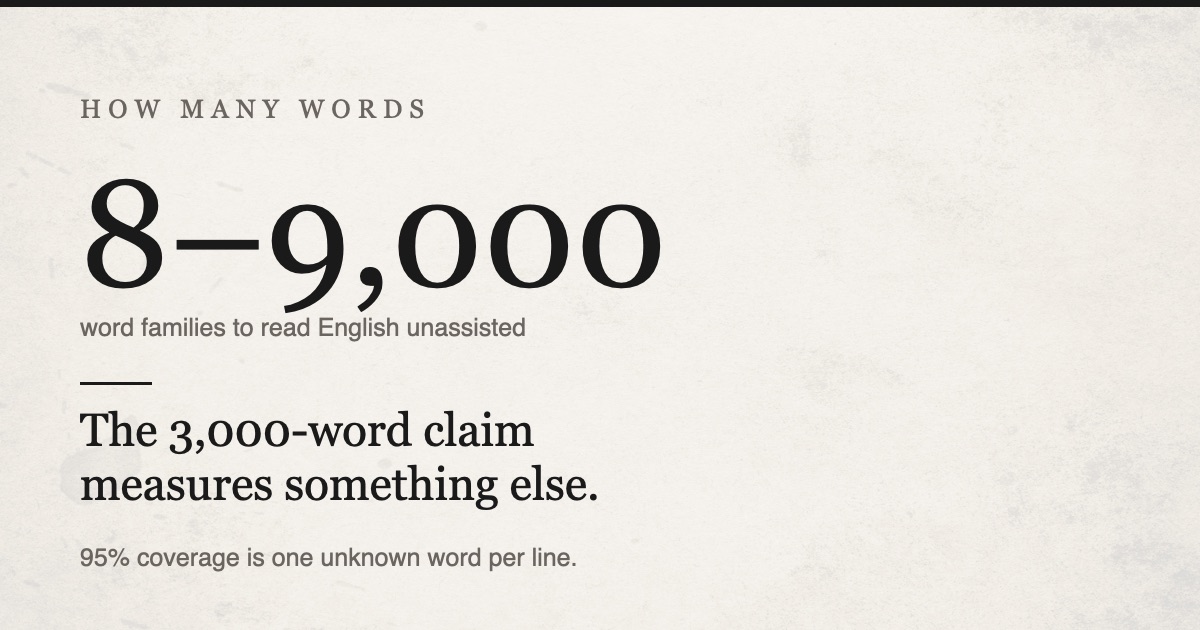
The 3,000-word claim is measuring something else
Nation (2006) puts unassisted comprehension of written English at 8,000–9,000 word families, and spoken English at 6,000–7,000. The 3,000 figure is real, sourced, and answers a different question.
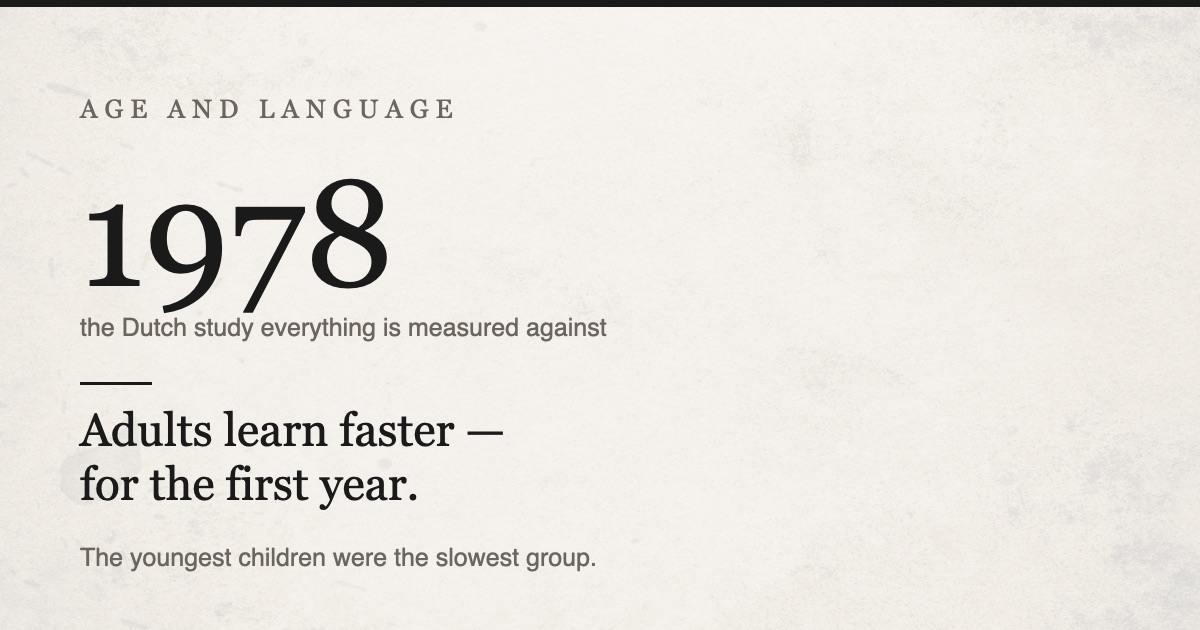
Adults learn languages faster than children — for the first year
The classic study followed English speakers of several ages learning Dutch in the Netherlands. The adults and adolescents progressed fastest; the youngest children were slowest. The folk belief is backwards about the part you can act on.
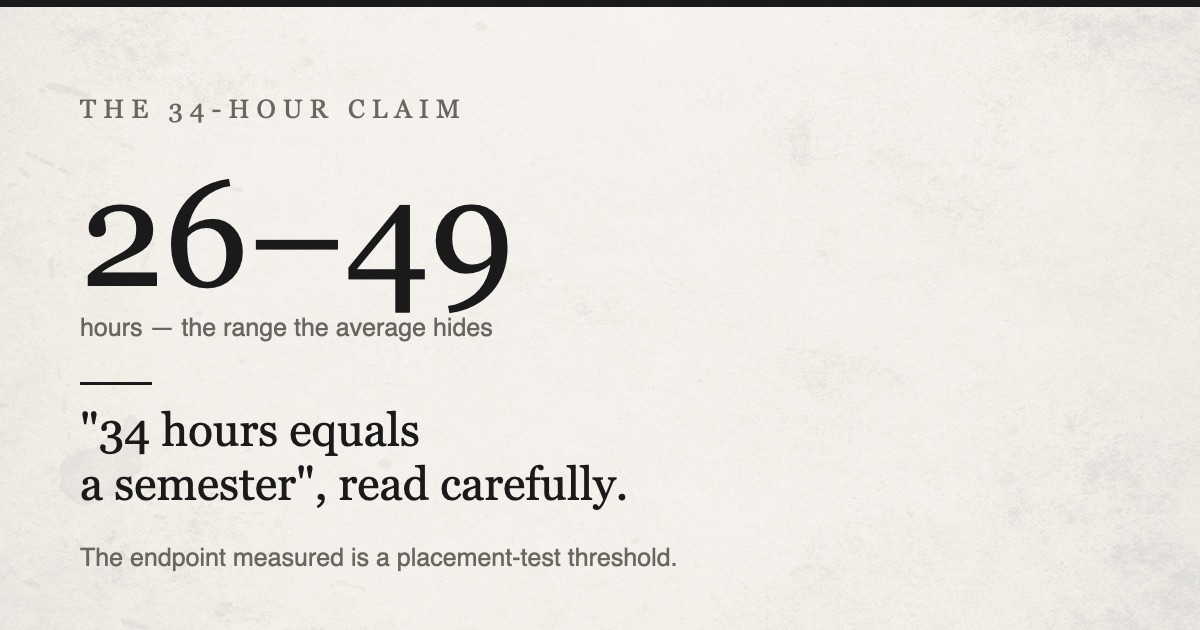
The "34 hours equals a semester" claim, read carefully
The study reports a range of 26 to 49 hours, averaged to 34. The endpoint it measures is a placement-test score for entering second-semester Spanish. Both of those matter more than the headline.
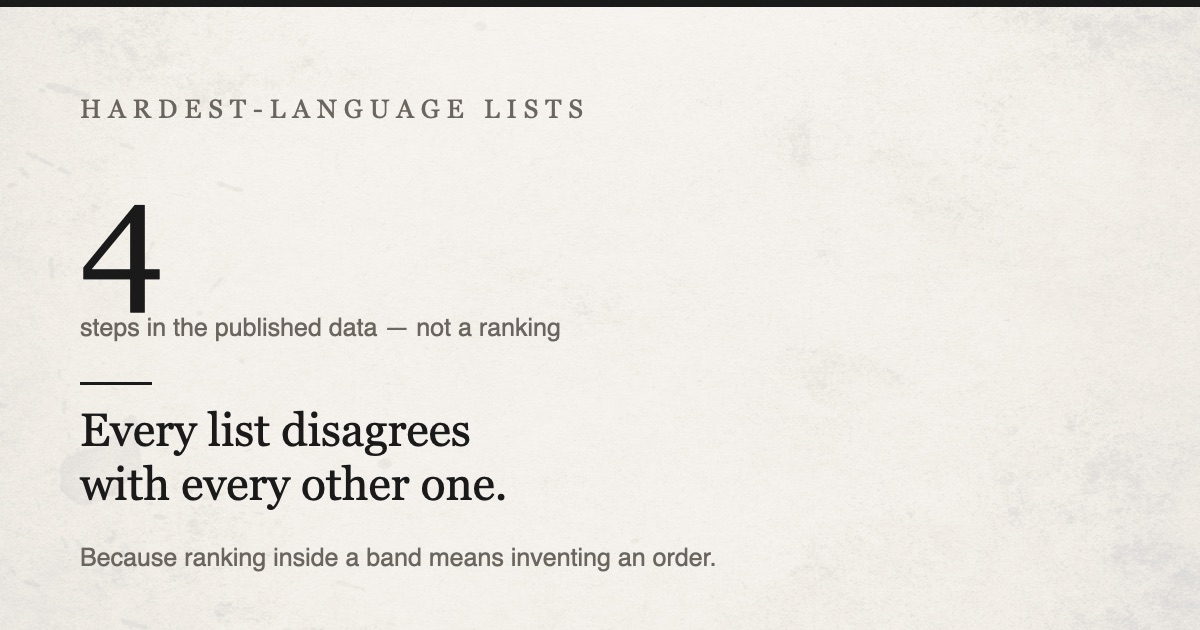
Why every "hardest language" list disagrees with every other one
Because most of them are ranking a feeling. The one list built from published data has four steps, not a gradient — and it refuses to name a single winner.
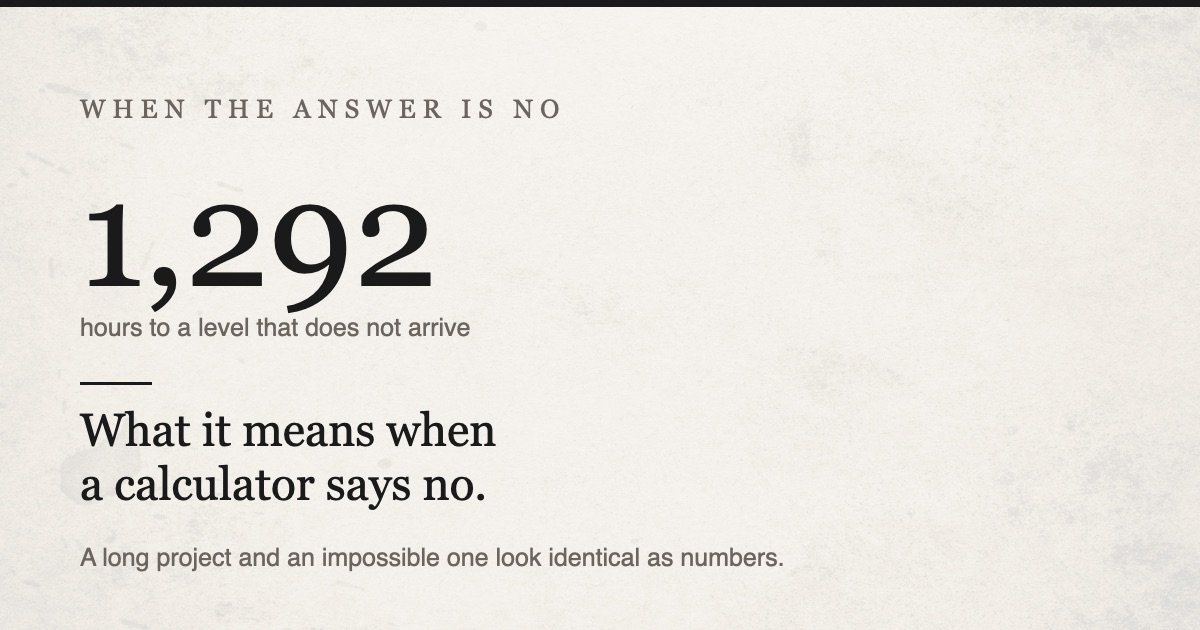
What it means when a calculator tells you no
Most estimate tools always return a number, because a number looks like an answer. Ours returns "this method does not get there" — and that output is the most useful thing it produces.
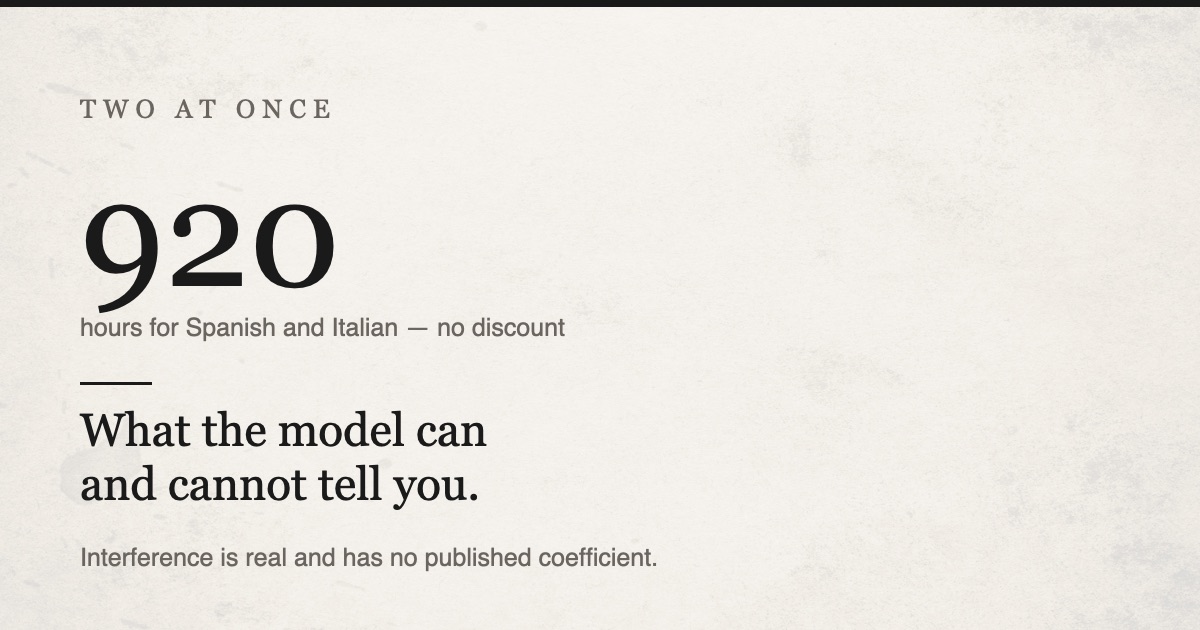
Learning two languages at once: what the model can and cannot tell you
Adding the hours together is the easy part and it is not the question. The interference effect between similar languages has no published coefficient, so this model does not have one — here is what can be said instead.
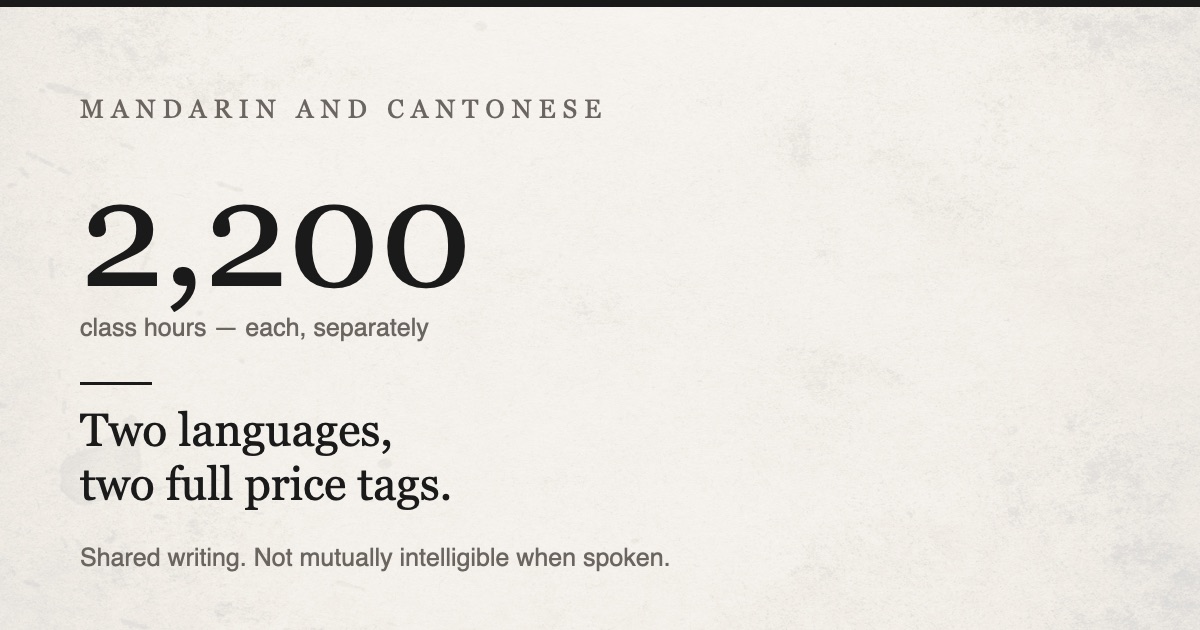
Cantonese and Mandarin are both 2,200 hours, separately
FSI lists them as two languages with two full price tags. Learning one does not get you the other, and the word "dialect" is doing damage to people planning around it.
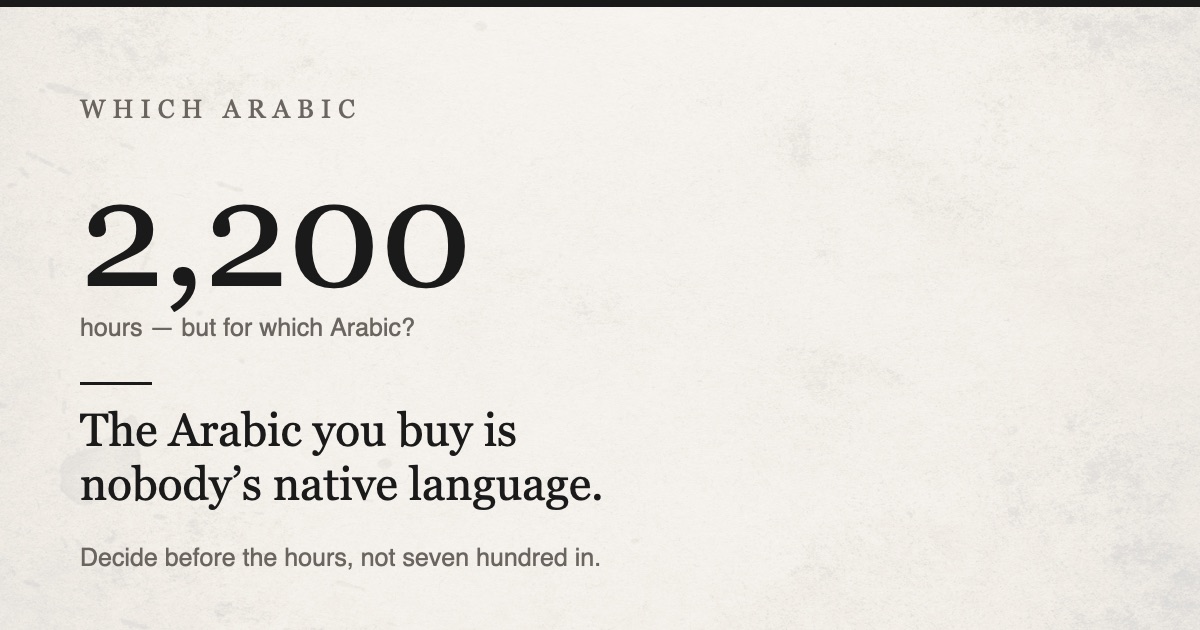
The Arabic course you buy is nobody’s native language
Modern Standard Arabic is what almost every course teaches and what nobody grows up speaking. Decide which Arabic you want before you spend 2,200 hours, because the choice is not reversible for free.
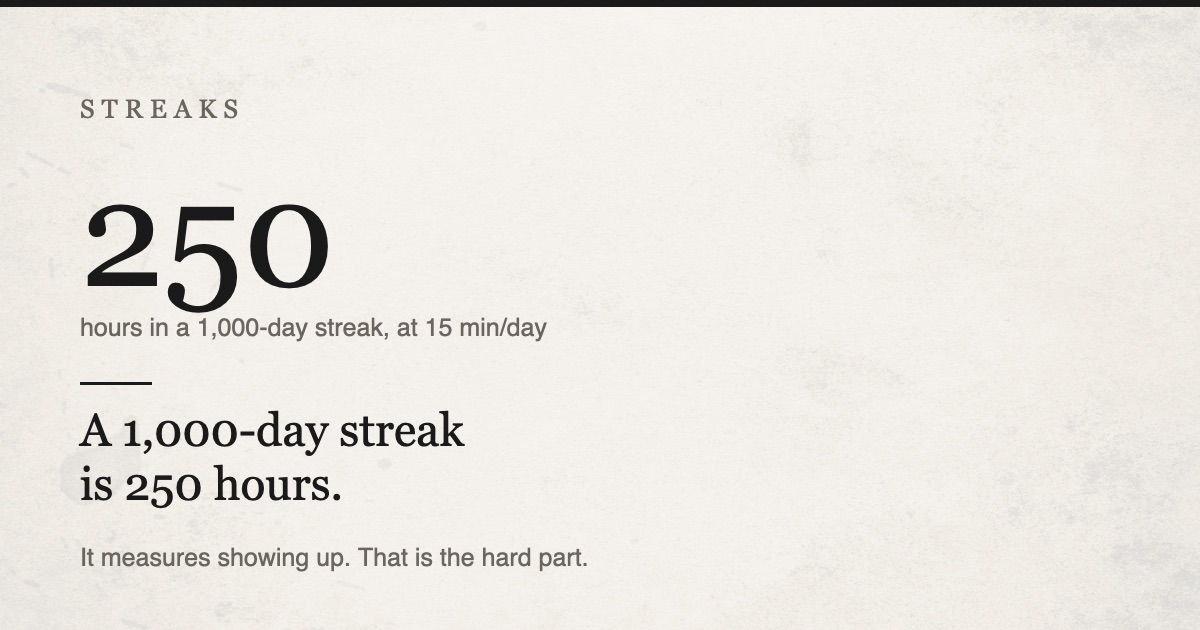
A 1,000-day streak is 250 hours, and that is worth knowing
Streaks measure showing up, which is genuinely the hard part. They do not measure progress, and the arithmetic of converting one into the other is short enough to do here.
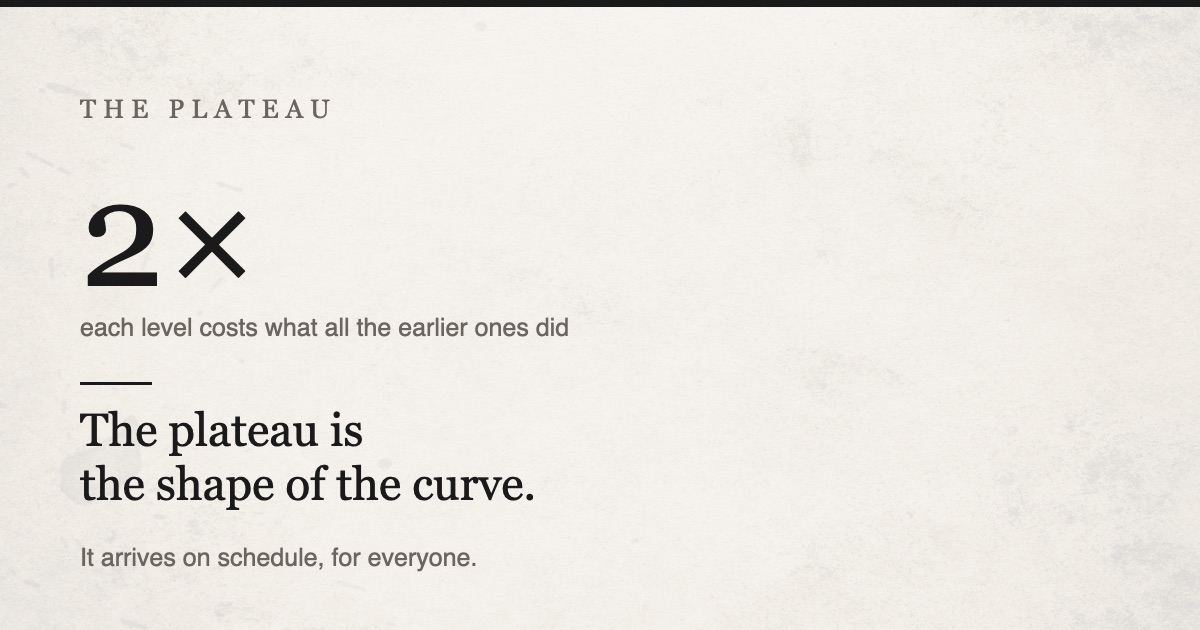
The plateau is not a plateau, it is the shape of the curve
Each CEFR level costs roughly as much as everything before it. So the point where progress stops feeling fast is arithmetically inevitable — and it is where most people quit.
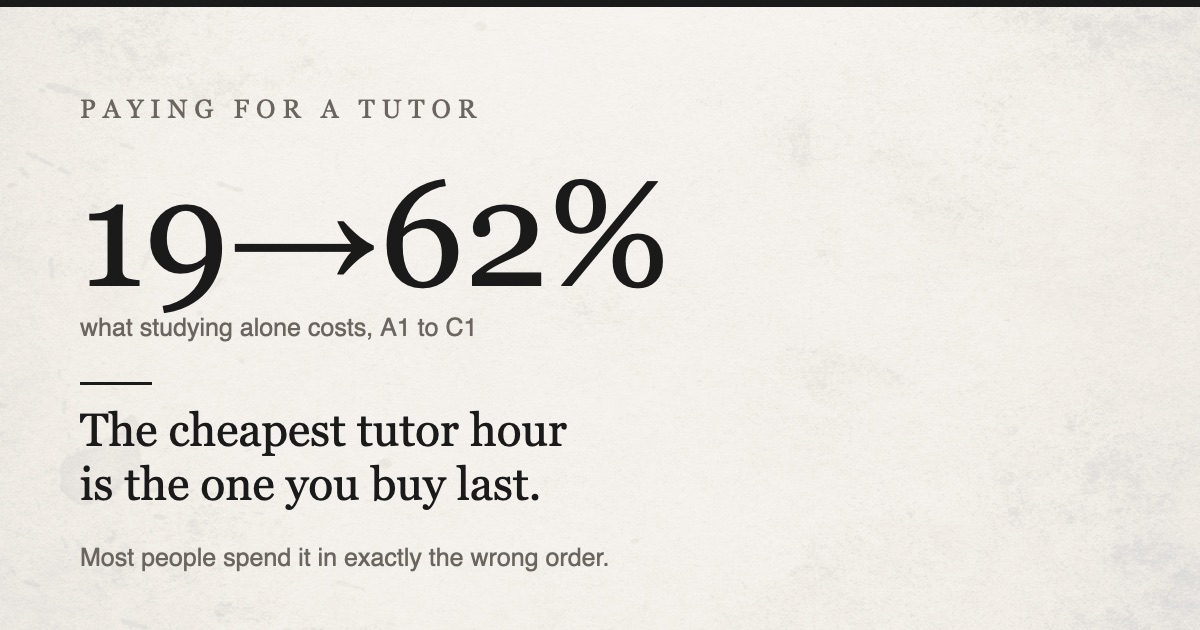
The cheapest tutor hour is the one you buy last
Tutoring is nearly FSI-equivalent at every level, and self-study is only 25% worse at A1. So the money is worth least at the beginning and most at the end — which is the opposite of how most people spend it.